Taliban

Standard

Almost everyone in the democratic world feels the same way about what’s happening in Afghanistan. We went in uninvited, ousted a government and installed a new one, introduced a democratic constitution and oversaw elections. We poured billions of dollars into modernising the country’s infrastructure and institutions. Above all we set new standards for human rights and, in particular, the rights of women and girls. Afghanistan was set for a brighter future under the protection of the mightiest military alliance the world has ever seen – or so it seemed.

And then we said, “Nah. Sod this for a game of soldiers. We’re off.” Or, rather, that was said on our behalf by the US President. None of the allies was strong enough to stand alone, or even in concert if the mightiest of them left the field.

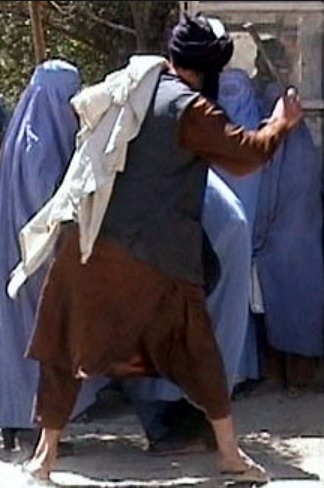
I do not need to dwell on the crimes that the Taliban has been guilty of. In our value system murder, genocide, kidnapping, rape, torture and slavery are heinous. For the Taliban they are standard operating procedure. Even after twenty years, their ideology and the wickedness that flows from it have not changed.

An uncomfortable thought crossed my mind this morning. What if Australia were invaded by the Taliban and we were subjected to the kind of brutal injustice that Afghans now face? How profound would be that shock? How devastated would be our way of life, our self-regard, our sense of place and purpose?

My next thought was even more uncomfortable. Would that devastation be anything like the impact that British colonisation had upon the Aboriginal inhabitants of this land? Were we (I mean my European forebears) the Taliban?

Bigotry of Low Expectations

Standard

We rarely go out on Monday nights because we don’t want t miss ‘Q&A’, an hour-long ABC TV programme with a panel of interesting people and a live audience.  Usually there are two Australian politicians from opposites sides, but this week the panellists were all foreign writers who were attending Sydney Writers’ Festival.

The most interesting, I thought, was a woman called Ayaan Hirsi Ali.  As you can see from the screenshot below, she is remarkably beautiful.  And as you might guess from her name, she was born a Muslim.  She writes about the need for reform in Islam.  One of her books is called ‘Heretic’: I haven’t read it, so I can’t personally recommend it.

AyanHirsiAli_QandA

I was particularly taken with her accusation that white liberal infidels are reticent about criticising Islamic dogma and custom, even those aspects that stand in stark contradiction to the ideals of liberal democracy – including forced marriage, devaluation of women and persecution of homosexuals and religious minorities. She used the phrase “bigotry of low expectations,” referring to a failure to hold Muslims to account because they cannot be expected to meet the standards we demand of our own kind.

This resonated with me. I am guilty of this kind of bigotry and so are most of my fellow-citizens.  For example, Aborigines are not expected to succeed in the mainstream world of study and work.  They are patronised, subsidised, favoured and cosseted in ways that guarantee a continuation of low achievement from generation to generation.

By the same token we make excuses for unconscionable conduct for which perpetrators claim a religious pretext.  I am thinking, for example, of halal and kosher slaughtering of animals and opting out of the general obligation to vaccinate one’s children.  There was even a case, reported this morning, where a group of accused men refused to stand when the judge entered the courtroom.  Their lawyer claimed that their faith forbade them to stand for anyone but Allah, and cited precedence.

Perhaps it’s our legacy of colonial guilt that makes us unwilling to demand as much from people of other races and faiths as we demand from ourselves, but I agree with Ayaan Hirsi Ali.  This is bigotry and we should shrug it off, and tell people to pull their socks up and behave like decent, responsible citizens irrespective of their ethnicity or religious affiliation.

The Bleeding Obvious

Standard

I get stroppy when people are pilloried for stating the bleeding obvious. This happens a lot to politicians because whatever they say is assumed to be politically loaded. Let me offer a couple of examples…

First, Tony Abbott (recently deposed Australian Prime Minister) remarked that taxpayers were subsidising a lifestyle choice by many indigenous Australians to live in remote communities, where employment opportunities are scarce and the cost of providing infrastructure and social services is high. I’m paraphrasing but I think that’s a fair summary. He was immediately criticised for making an outrageous attack on disadvantaged people and ridiculed for using the phrase ‘lifestyle choice’.

I don’t know what was in Tony Abbott’s heart and mind when he said that, but it is objectively true that people, indigenous or otherwise, can choose where they live. According to the Australian Bureau of Statistics: “At June 2006, most Aboriginal and Torres Strait Islander people lived in non-remote areas with an estimated 32% of people living in major cities, 43% in regional areas, and 25% in remote areas.”

It may be argued that many indigenous people feel a strong spiritual connection to their land (their ‘country’) and would not be happy living elsewhere. But satisfying that felt need is unquestionably a lifestyle choice, and making that choice is possible only because the rest of the population pays for it. Most non-indigenous Australians feel a mixture of pity and guilt towards their indigenous fellow-citizens so they may be perfectly willing to pay whatever it costs. But what’s wrong with pointing it out?

Second, Theresa May (UK Home Secretary) stated that there was a limit to the rate at which immigrants could be received into the UK without causing social cohesion. Again, I’m paraphrasing.

Her words were perhaps an uncomfortable reminder of Enoch Powell’s “rivers of blood” speech in 1968, but they were nevertheless true. Perhaps that limit exceeds the inflow of immigrants that would result from the UK’s acceptance of a ‘fair’ proportion of the current wave of people fleeing war, persecution and poverty, who are hammering at Europe’s door – or in many cases smashing the windows and climbing in. But it cannot be denied that there is a limit. It’s bleeding obvious, isn’t it?

Note: The phrase “the bleeding obvious” is a quotation from ‘Basil the Rat’, the final episode in the brilliant TV series ‘Fawlty Towers’, written by John Cleese and Connie Booth in the 1970s.