And this year’s Stroppy goes to . . .

Standard

C M Lewis! What’s that? You’ve never heard of him? Well, neither had I until my old friend Ron Allan nominated him for the 2018 Stroppy Git Award for Meaningless Twaddle, based on the following piece of writing that was published in the Journal of Imperial and Commonwealth History in 1987:

Transnationalization further fragmented the industrial sector. If the dominant position of immigrant enterprises is held to have reduced the political impact of an expanding industrial entrepreneurate, the arrival of multinational corporations possibly neutralized the consolidation of sectoral homogeneity anticipated in the demise of the artisanate.

Some credit for this nomination must also go to Thomas Sowell, who cited it in his essay ‘Some Thoughts About Writing’ and thereby brought it to Ron’s attention

I looked for a picture of C M Lewis at Google Images, but I was offered only C S Lewis and C Day Lewis. So here’s a picture of Thomas Sowell instead, together with a quotation that will appeal to many readers.

Nominations for next year’s award can be submitted at an time.

Populism

Standard

The Cambridge Dictionary has chosen ‘populism’ as its Word of the Year. The word doesn’t even appear in my Australian Modern Oxford Dictionary – only a definition of a populist as “a person who claims to support the interests of ordinary people.”

That sounds pretty admirable to me. So why are the words ‘populism’ and ‘populist’ always used pejoratively? Nobody ever says, “That Trump fellow is a real populist. Good for him!” Could it be that the political élite, the pointy-headed intellectuals, the upper middle class people who work in universities, newsrooms and government departments, really do look down on the unwashed masses as Trump and many others claim? Do those people really think they know better what’s good for the common people than the common people themselves?

I have just read an article by Cas Mudde (pictured) in the Guardian Weekly (wishing that I’d thought of that name to give one of my characters in The Eeks Trilogy) in which he argues that what is often called ‘populism’ is really nativism. He goes on to define nativism as “an ideology that holds that states should be inhabited exclusively by members of the native group (‘the nation’) and that non-native people and ideas are fundamentally threatening to the homogenous nation-state;” and characterise it as “nasty.”

This got me thinking about the concept of the nation-state and why it was regarded as such a good thing in the 19th and early 20th centuries; why political heavy­weights in the richest countries of the West now consider it anathema; and why the epithet ‘racist’ is routinely hurled at anyone who expresses a preference for living among people with similar cultural practices, beliefs, values, history and language.

I flipped through a recent issue of the Guardian Weekly and found stories about conflict arising from this preference in six countries: Cameroon, Cyprus, Hungary, Myanmar, Poland and Tibet. And there was a story about German politics, which was dominated for over 40 years by a desire to restore nation-statehood.

Perhaps it’s time for us to be more tolerant of this preference, which seems to be deeply embedded in human nature whether we like it or not.

Award Time Again

Standard

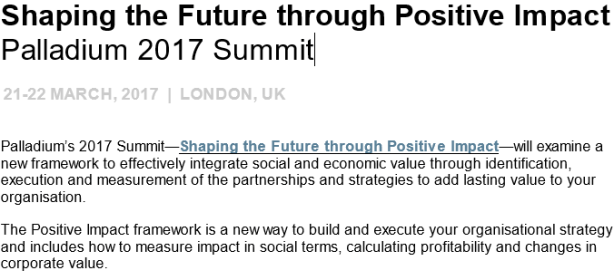
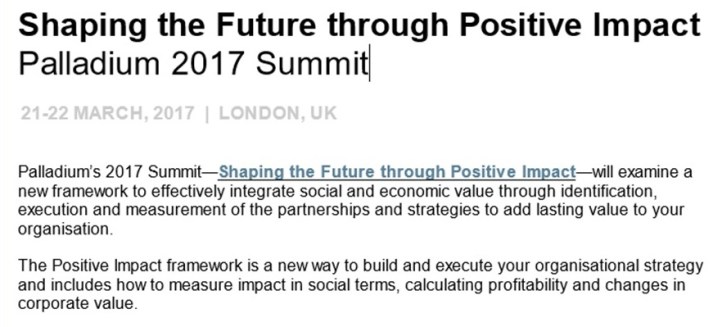
Yes, it’s time to submit your nomination for the annual Stroppy Git Award for Meaningless Twaddle – known in the popular press as ‘The Stroppy’. Last year’s Stroppy went to a firm called Palladium for this superb piece of twaddle, devoid of any meaning and garnished with a split infinitive to make the judges wince:

Palladium2017

The same firm has already received a nomination, but let’s make it a fair fight. Come on now – there must be equally meaningless bits of twaddle out there somewhere! Deadline for nominations: Sunday 21 January (midnight GMT).

Hate Speech

Standard

Yesterday I was paddling a kayak on the Dnieper River. I was in the back seat, Tamara was in the front. Out of the blue she asked me about my religion. I replied that I was an atheist. After a moment’s thought she said, “So what do you love?” She gestured upward, as much as one can while paddling a kayak, so clearly “My wife” or “My family” would not do as an answer.

Not really us – our kayak was red.

“Truth and justice,” I said eventually. That seemed too short a list and I searched for more things that I could express in Russian. But even in English I decided those two were enough.

Ashore, I pondered my answer. Does loving truth and justice necessarily mean hating untruth and injustice? After all, untruth and injustice encompass ignorance, superstition, indoctrination, exploitation, tyranny, cruelty… all things to be hated, surely.

Then today I was listening to a podcast: Phillip Adams interviewing US journalist Glenn Greenwald, who when practising as a lawyer had defended extremists’ first amendment right to express views that most people found abhorrent.

“What about hate speech?” asked Phillip. I found myself agreeing with Glenn when he said that freedom of speech cannot be qualified. Who defines ‘hate speech’ – the Government? Facebook? Google? He cited German cases where criticism of Israel’s treatment of the Palestinians has resulted in prosecution as anti-Semitic hate speech.

But is there a distinction to be drawn between hatred of abstract ideas and hatred of the people who subscribe to those ideas? We all (I hope) hate what is done in Daesh’s name: murder, kidnapping, rape, slavery and the rest. But is it alright to hate the perpetrators? And is it alright to express that hatred publicly?

From kayaking to cognition. From paddling to pontification. What do you think?


“Temperatures could halve…”

Standard

I just read this headline in an Australian newspaper: “The mercury could plummet by as much as half this weekend.” In the same story was the caption: “Temperatures could halve in some places.”

This is stroppy-making balderdash!

Having read the article it was clear that its author was referring to a drop from 20°C to 10°C. If the Fahrenheit scale were used, the drop would be 36%, not 50%. But the only sensible scale to use in this way is the Kelvin scale, in which zero corresponds to absolute zero – colder than which it is impossible to go. On that scale the drop would be a mere 3.4%. That wouldn’t make much of a headline, would it?

This isn’t an isolated instance. Journalists seem to lack basic scientific understanding, and their sub-editors are more interested in concocting clever puns (“Lion Park Roaring Success”) than ensuring accuracy.

Here’s another example. Elon Musk is going to build the world’s biggest lithium battery in South Australia, my home state. It has been variously described in the press as a 100MW battery and a 100MWh battery. The former makes no sense. A watt is a rate of flow of energy. A watt-hour is a unit of energy analogous to a volume of fuel. In fact 1 litre of diesel oil contains about 10,000 watt-hours (or 10kWh) of energy.

This is not actually me

An aside…

When I use the rowing machine at the gym I can maintain an energy flow of about 140W (or 0.14kW). So if I rowed for a living, selling the energy I generate for 23 cents per kWh (which is roughly what I pay for electricity in my home) I would earn 0.14 x 0.23 x 40 = $1.29 for a 40-hour week.

Falling pregnant

Standard

I’ve been getting emails offering me help to fall pregnant. I’ve been getting others offering to help me build a chicken coop too. I’m not planning on doing either, with or without help. But the ones about falling pregnant got my strop-meter ticking.

Why do we use such negative words for things to do with love and life? People lose their virginity and fall pregnant. Surely one’s virginity is not lost, but given away in a joyous step along the avenue of life! And why should we bracket conception with falling over, falling from grace, fallen women?

I suggest that we all start using other words and phrases, for example:

  • Not “She lost her virginity” but “She attained post-virginal status.”
  • Not “She fell pregnant” but “She became an incipient life-giver.”

Fallen Woman

Incipient Life-Giver


Not as snappy perhaps, but a lot more positive. Anyone got a better idea?

Then what about ‘vagina’?  The first time I came across the word was in a Latin lesson: it’s a scabbard.  Not a pretty association.  The Malay word translates as ‘baby tunnel’.


Community

Standard

About 30 years ago I was listening to the radio and heard an alarming news item. Mental hospitals were to be closed and the patients were to be cared for in the community. “Holy cow!” I thought. “Mrs SG and I have no training in caring for mentally ill people, nor inclination to do so! And anyway, since the boys have their own bedrooms we don’t have room for any!”

I was really expected someone with a clipboard to come to the door and ask how many deranged people we’d like, and what sort. Then it dawned on me, after hearing the issue dealt with in interviews and chat shows, that being cared for in the community just meant putting people in suburban houses and flats, procured for the purpose, and having professionals look after them there. ‘In the community’ didn’t mean ‘by members of the community.’

But it made me think: What is a community nowadays? The word ‘community’ suggests to me a group of people who have some kind of affinity, some interest in one another’s welfare, even some sense of responsibility for one another. Just living in proximity to someone is surely not enough.

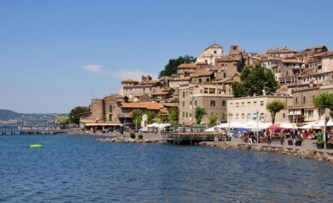
There are places where geographical proximity and affinity do go together. My sister has lived for 35 years in a 13th century Italian village called Anguillara Sabazia. She knows everyone, everyone knows her, and when anything happens to anyone it is a subject of conversation in the streets, shops and cafés. An old lady died while I was visiting my sister. A poster advertised news of her death and details of her funeral, and the buzz was all about who would look after her cat and who would give her cleaner a job.

Newsreaders often say things like “A community is in shock following the death of a Bungaroo fisherman at sea yesterday,” or “Leaders of the Muslim community affirm their opposition to extremism.” They conjure up images of people coming onto the streets to share their feelings, huddling over beers and coffees or feverishly texting one another in an echo-chamber of agreement.

But it’s not like that where Mrs SG and I live. Is it like that where you live? Do you belong to a community? Does it have a physical boundary or is it a reality only in cyberspace? Do share.

Elegy

Standard

I lay me down, inviting sleep,
Then close my eyes and quietly weep;
And, weeping, I compose an elegy
To all who haven’t read my trilogy.
Oh what joy when, with contrition,
They rectify this sore omission!
Enlightenment and laughter will
Fill their souls and overspill!

Critic   Oi, poet bloke. That don’t rhyme.

Poet    What?!

Critic   “Elegy, trilogy.” That don’t rhyme. Won’t do.

Poet    Well, it very nearly rhymes.

Critic   Not good enough.

Poet    It’s assonance, for God’s sake.

Critic   Asinine, more like.

Poet    Assonance! It’s a perfectly legitimate poetic device. Look it up.

Critic   Wouldn’t have done for John bloody Betjeman and he was Poet Laureate.

Poet    Well it did for Philip bloody Larkin and he was Poet Laureate too!

Critic   Phil who?

Poet    Philip Larkin! Half the time he didn’t bother with rhymes at all, and when he did it was half-baked. “Clothes, those.” “If, life.” “Back, dark.” See?

Critic   S’pose you stand a chance then. Next Poet Laureate?

Poet    It’s… not impossible.

Menial Tasks

Standard

I just read an article in the Sydney Morning Herald (the SMH: my favourite Australian on-line read). It’s yet another one about senior female professionals being asked to do things that are below their pay-grade: doctors taking lunch orders in this case.

secretaryIt reminded me of a talk that my boss (the late Sam Wright, a good colleague and friend, much missed) gave to the staff he managed about 45 years ago. Let me explain the situation. All the men in the organisation were professionals and all the women were secretaries. So any woman was automatically junior to any man, and the women (or ‘girls’ as we called them then) organised a roster among themselves to ensure that everyone – men and girls alike – got tea twice a day and the cups were washed up.
It worked pretty well. But then one day the organisation – the British Federation of Master Printers as it was called then – hired a woman in a professional role. What to do?!

Sam grasped the nettle, called a meeting of staff and told us all that the new recruit was to be treated as a man. The girls were unhappy at first. She was a woman, right? So why shouldn’t she make the tea and wash up the cups like the rest of them? It was like the days of apartheid in South Africa, when Japanese were treated as honorary whites but Chinese weren’t.

But something in the SMH article jarred. Someone is quoted as saying “We’re talking about senior medical officers. Qualified doctors tasked with taking lunch orders and told to perform menial, secretarial tasks.” I looked up ‘menial’ in the Oxford English Dictionary and it defined it as “requiring little skill and lacking prestige.” I have never thought that secretarial duties require little skill, and the most skilled of the secretaries I’ve met were accorded much respect. Not prestige maybe, but certainly no-one would have labelled them ‘menial’.

The First ‘Stroppy’

Standard

Yes, that’s what some people have been calling the new Stroppy Git Award for Meaningless Twaddle. There have been some strong contenders, especially from the USA, but the winner is… Palladium! Their advertisement for a so-called summit on “reshaping the future through positive impact” was the very first nomination:

strogamet_01

No other nomination surpassed in either meaninglessness or twaddledom.