Multiculturalism: Not Just Food and Dancing

Standard

There has been an exposé on Australian television about the extent of influence-buying that the Chinese Government has been engaged in. Evidently it includes making big donations to political parties and then exerting pressure to change policies – towards Chinese imperialism in the South China Sea for example. The donations do not come directly from the Chinese Government or the Communist Party, but through well-connected businesspeople.

Chinese students in Australia – numbering more than 46,000 at the last count – are subject to surveillance and ‘helped’ to participate in demonstrations of support for the party line. Educational and cultural institutes have been set up at tertiary institutions, financed and controlled by the Chinese Government with a plainly political agenda. Yesterday the Australian Broadcasting Corporation drew attention to ways in which the Chinese Government is using the Australian media.

When we embraced multiculturalism in the 1980s we thought it was just about accepting more ethnic diversity, having a new TV channel broadcasting in multiple languages, eating unfamiliar food and watching people dancing in the street in dragon costumes or embroidered peasant blouses. Good clean fun.

But ‘culture’ goes much deeper than that. We find ourselves confronted with halal and kosher slaughtering, female genital mutilation, forced marriages, and dealings in the spheres of business and politics that look a lot like corruption. These and other practices that make us uneasy are probably here to stay.

Sports Photography

Standard

I have very little interest in sport and not much more in photography, but my eye was caught by this photograph in the Guardian Weekly.

The surfer is Macy Callaghan, who first hopped on a board when she was 3.  She is shown winning the World Surf League Qualifying Series at Boomerang Beach. The picture was taken by Jonny Weeks.

I’m sharing this because I think it’s the ultimate sports photo. The composition, the sense of movement, the juxtaposition of colours… there’s nothing one would want to change.  They say a picture is worth a thousand words. Well, they’d have to be very well-chosen words to replace this one.

Sorry for the muted colours: it’s a scan from a newspaper.
Click on Macy’s name above to see sharper, brighter pictures
.

Politicians

Standard

Motherhood used to be the hardest job in the world. Now it’s being a politician in a modern democracy. Their power has waned as that of corporations and lobbyists and special interest groups has waxed, but they are still blamed for everything and subjected to merciless ridicule. Worse, they are accused of dishonesty, usually not with malice but which a casual assumption that the words ‘politician’ and ‘liar’ are pretty much interchangeable.

This is both unfair and dangerous. It’s unfair because the job of a politician is to find ways to make everyone feel that their opinions have been respected and their interests served. This is impossible without saying things that are, at the very least, misleading.

And it’s dangerous because if someone is accused of an offence often enough they will start to think, “Well, if everyone thinks I’m guilty of this terrible thing I might as well be guilty of it!” Let’s call this the Suspected Spouse Syndrome. Are we training our politicians to behave dishonestly, just by letting them know that we expect it?

Hunter Gatherers at Heart

Standard

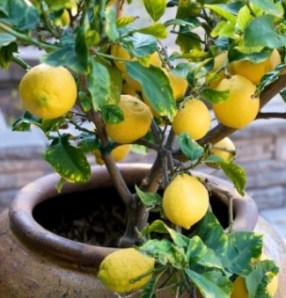
We have a tiny lemon tree in our garden – so tiny that it fits in a pot. Twelve lemons have been slowly growing on it for a very long time, turning a slightly yellower shade of green each day, and today I harvested the first one. On my way back to the house I found myself singing an old song under my breath:

To reap and sow
And plough and mow
To be a farmer’s bo-o-o-oy,
To be a farmer’s boy!

My family left the land five generations ago, but deep down I’m still a peasant. I think we all are. In Australia the atavistic memory has more to do with cattle-droving or sheep-shearing, among the white population anyway, but the difference is superficial.

Even deeper down we are hunter-gatherers still. Why else do we experience a thrill when we enter a supermarket? Why else do we stalk special offers through the undergrowth of overpriced junk food and boring staples? Why else do we mutter thanks to forgotten gods as we take the last “reduced” packet from the shelf? Why else do our eyes dart to the bottom of the receipt to see how much we’ve “saved”?

For two million years we’ve been honing skills that have served us so well that… well, we have survived. From ocean to savannah to jungle to supermarket aisle. Go, Humanity!

Fairness

Standard

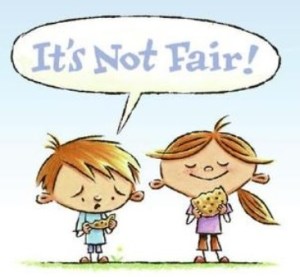
Children develop a sense of fairness from an early age. Hitting someone younger and weaker is unfair. Collective punishments are unfair. Paying pocket money below the going rate, determined by a survey of one’s peers, is unfair.


On Tuesday our Treasurer presented the annual budget to Parliament and announced it to be ‘a fair budget’. ‘Fair’ is now the top buzz-word in Australian politics. The trouble is that the word means different things to different people.

On the left of politics, it means taking more from the rich and distributing it to the non-rich. The exact positioning of the dividing line between the rich and the non-rich is itself a matter for debate of course. Or rather, it is left to each elector to decide which side of the line he or she sits. For most of us ‘rich’ is defined as ‘better off than me’, so policies that involve taking from the rich are generally popular.

But on the right of politics fairness involves allowing people to earn and retain as much as possible of the value of what they produce. According to the Economics textbooks, that value is represented by the wage or profit that the free market assigns. So whether one is a banker, a nurse, a soldier or a casino owner, what you receive is what you’re worth. Obviously it’s unfair to take more from the most productive members of society.

The Economics textbooks support the left-wing view too though. They point out that an extra dollar in a poor man’s pocket does him more good than it would do for a rich man, so the total wellbeing of society will always be increased by redistributing from rich to poor until perfect equality is achieved.

I would rather take ‘fair’ out of the conversation and substitute ‘pragmatic’. The rich always have to pay more (both absolutely and relatively) because, to borrow bank-robber Willie Sutton’s famous quotation, “That’s where the money is.” But the rich are also the most able to find ways to avoid and minimise taxation; or, if paying tax in Country A becomes too onerous, move to Country B.

So it’s a balancing act. Pragmatism is all. To paraphrase a line by Clint Eastwood, “Fair’s got nothin’ to do with it.”

Community

Standard

About 30 years ago I was listening to the radio and heard an alarming news item. Mental hospitals were to be closed and the patients were to be cared for in the community. “Holy cow!” I thought. “Mrs SG and I have no training in caring for mentally ill people, nor inclination to do so! And anyway, since the boys have their own bedrooms we don’t have room for any!”

I was really expected someone with a clipboard to come to the door and ask how many deranged people we’d like, and what sort. Then it dawned on me, after hearing the issue dealt with in interviews and chat shows, that being cared for in the community just meant putting people in suburban houses and flats, procured for the purpose, and having professionals look after them there. ‘In the community’ didn’t mean ‘by members of the community.’

But it made me think: What is a community nowadays? The word ‘community’ suggests to me a group of people who have some kind of affinity, some interest in one another’s welfare, even some sense of responsibility for one another. Just living in proximity to someone is surely not enough.

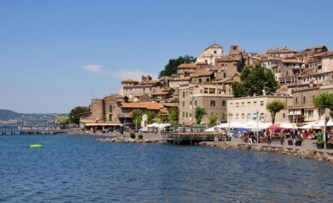
There are places where geographical proximity and affinity do go together. My sister has lived for 35 years in a 13th century Italian village called Anguillara Sabazia. She knows everyone, everyone knows her, and when anything happens to anyone it is a subject of conversation in the streets, shops and cafés. An old lady died while I was visiting my sister. A poster advertised news of her death and details of her funeral, and the buzz was all about who would look after her cat and who would give her cleaner a job.

Newsreaders often say things like “A community is in shock following the death of a Bungaroo fisherman at sea yesterday,” or “Leaders of the Muslim community affirm their opposition to extremism.” They conjure up images of people coming onto the streets to share their feelings, huddling over beers and coffees or feverishly texting one another in an echo-chamber of agreement.

But it’s not like that where Mrs SG and I live. Is it like that where you live? Do you belong to a community? Does it have a physical boundary or is it a reality only in cyberspace? Do share.

Trump’s 100 Days

Standard

I’ve commented on ‘roundism’ before – our tendency to assign special importance to round numbers. Why is a 40th birthday such a big deal? Why do we delight in seeing a car’s odometer click over to 100,000? Why do we bring out the brass bands and bunting for centenaries?

Well, the first 100 days of a political leader’s being in power holds the same magic for us. Donald Trump has just attained this milestone, which he himself declared would mark a period of tremendous achievement.

It’s certainly been a period of tremendous excitement – a roller-coaster ride for the President’s friends and foes alike, and especially for people like President Putin who started as a friend and has now been re-categorised.

I don’t intend to add to the great wave of commentary triggered by the 100-day milestone, but I’d like to relay a pithy comment from my old friend Ron Allan when the Trump presidency was a mere 74 days old:

“I’m pondering what will happen when his frustration level builds. He has his list of things to do. So far the record is this:    

  • What he has authority to do on his own, the supreme court is blocking.
  • What he has to do through the legislature, the legislature is blocking (in spite of both houses and the presidency being of the same stripe).

“If this keeps going, he could resign in frustration. “America does not deserve to have me. I’m not wasting my time any more. etc etc.”

“It is hard to see him lasting. He got the job with the megalomaniac notion that only he can (and will) drain the swamp. If he fails he will not stay. So it’s a race. Which comes first, Resignation or Impeachment? I think the risk of Assassination is receding.”

They Know Everything About You!

Standard

Or do they? Here is a listing of the junk mail I received today, as filtered by Hotmail:

I have never expressed, in thought word or deed, online or offline, the slightest interest in building a boat, gardening, extreme dieting, getting pregnant, learning the piano or keeping chickens (whether for fun, for profit or for deviant sexual purposes).

If that’s an indication of what Big Brother’s algorithms have worked out about my life, I am relieved.

On the other hand, since I am relying on those algorithms to steer people who are interested in robots, artificial intelligence and extraterrestrial colonisation towards my books (The Eeks Trilogy published in a single e-volume ‘Goldiloxians’), I am distressed. Are my potential readers being directed to cricketers’ autobiographies and railway timetables?! Rather more efficient invasion of privacy is called for, I think.

White Australia Policy

Standard

We’ve had a rash of news stories about employees being paid less than the legal minimum wage. In the most extreme cases it has not been an oversight or a one-off try-on, but a business model that works like this:

  • A small-time businessperson buys a franchise from a big company, such as Seven-Eleven.
  • The cost and conditions of the franchise make it impossible to pay legal wages and make a profit.
  • So the franchisee employs foreign students and pays them a fraction of the legal wage. The big company (the franchisor) may give a nod and a wink, or even informally explain how to do it.
  • People on a student visa are allowed to work up to 20 hours per week to help finance their studies, but they are induced to work 40 or more hours per week for 20 hours’ pay. How are they able to do this and study effectively as well? The likely answer is, “They can’t.”.
  • Timesheets are falsified to make the books look right, and the students don’t complain because they are as culpable as their employers: they are breaking the terms of their visas and could be deported.

In revelations of this law-breaking on TV most of the students and most of the franchisees appear to be of South Asian origin. None (that I have seen) appear to be of Anglo-Celtic origin. This observation sent me to my bookshelves to find an old publication called ‘Australia: Official Handbook’. It is dated January 1945 and it was sent by the Repatriation Commission to a new immigrant. The following passage is interesting:

“At the outset it may clear away misconceptions to give a brief outline of the immigration policy that is generally known as the “White Australia” policy.

“To the principle of “White Australia” all political parties in the Commonwealth subscribe, for the economic reason that the white man’s standard of living would be endangered by the introduction of coloured labourers who would be prepared to accept wages and to work and live under conditions that are not acceptable to a white workman.”

I share this without editorial comment.

The New Opium War

Standard

There are episodes in British history that we’d all rather forget. The two great nineteenth century assaults on Chinese sovereignty are on that list. Dubbed the Opium Wars, their purpose was to open China up to foreign trade – especially with the British and especially for opium imports from British India.

The First Opium War (1839-42) went well for the British – they got Hong Kong for example – so, flushed with the success of the Crimean War, they went back for seconds in 1856.

Nowadays we are appalled at the idea of a powerful state forcing a weaker one to allow it free rein to lure people into lives of wretched addiction, but at that time it was just a matter of free trade. And foreigners didn’t count for much anyway.

I’m struck by (and stroppy about) a modern parallel. An Australian casino company called Crown has built big glittery casinos in Macau and Australia, and at the centre of its business model is the luring of rich Chinese to its tables. They are variously called ‘whales’ and ‘VIPs’. Gambling in mainland China is illegal, as is soliciting custom on behalf of gambling enterprises. So Crown operates behind a façade:

“Selling gambling?! Perish the thought! We’re just selling nice holidays at luxurious resorts whose many attractions happen to include a little casino or two.”

The leaders of the Chinese Communist Party are neither stupid nor infinitely patient. They know exactly what’s going on, including the use of offshore casinos by corrupt officials and businesspeople to launder dirty money. They fired warning shots which included the rounding up of some smaller fry from South Korea – a device known in China as ‘killing the chicken in front of the monkey’ – and then decided they’d had enough. A bunch of Crown employees, Chinese and Australian, were arrested.

Good on you, Xi Jinping, I say. I still disapprove of your lawless actions in the South China Sea and your suppression of freedom of expression in Hong Kong and on the mainland, but you can hammer Crown all you like.