There have been many celebrations about the overthrow of tyrants. We always expect that when the tyrant has gone there will be a flowering of righteousness; that good people will step into the light, take the vacant helm and steer the ship of state onto the right course.
The right course always means our own – of course. In the Western World the right course is towards democracy, capitalism and individual rights. We felt cheated when China adopted our technology and business models, moved into our markets and grew rich, but failed to adopt our politics and morals. That wasn’t the deal! And what about Russia? Iraq? Libya? Myanmar?

Now we rejoice in Joe Biden’s victory. Another tyrant has been overthrown. Will we be disappointed again? Will the unhealthy miasma that produced the phenomenon of Trumpery be blown out to sea by the Bidon/Harris breeze? Or will it linger? Will the honest efforts of good people be brought to nothing by an infection that they barely understand and lack the tools to fight?
Let me change the subject, but only slightly. I have tried to think of an instance where bitter fighting has been brought to an end without a clear victory and decisive defeat. I cannot. Can you?
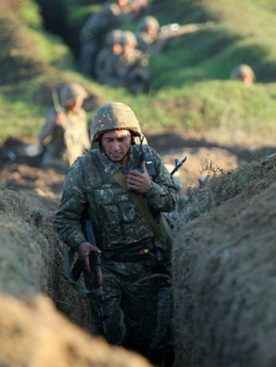
It was not the US presidential election that prompted me to think along these lines, but the outbreak of war between Armenia and Azerbaijan. This is not a new fight. Wikipedia has a good account of its dismal history. Can generations of genuinely-felt grievance be ended at a conference table? Can some outsider mediate a lasting peace? Will a signed piece of paper stop the bloodshed?
I think not. I think one side must win and the other side must lose. Clearly and decisively. Like Donald Trump, the loser will have to surrender before the fighting can stop. Usually this means fighting until one side is too exhausted, broken and broke to carry on. Then a kind of healing can begin. Some of the closest allies were once the bitterest of foes.

And this brings me to a conclusion that surprises me. For all the things that Trump did wrong, history may judge him well for siding uncritically with the Rogue State of Israel, climaxing in a deal with the UAE. Much as one weeps for the dispossession and oppression of the Palestinian people, perhaps they have to accept and acknowledge defeat at their oppressors’ hands before they can heal and rebuild – helped by generous gazillions from Israel’s friends.
 I have just read an article by
  StroppyGit