Council Cuts and Churchill

Standard

Mrs SG and I are visiting Southampton, on the south coast of England. This afternoon we went to the art gallery. Seeing something resembling a pay-point we asked if there was an entry fee.

“No,” said the man on duty, “It’s completely free. But I should warn you that we close at 3 o’clock.” I glanced at my watch. It was 2:40.

“Is that because it’s Monday?” I asked.

“No. We’re open from 10 to 3 Monday to Friday, and to 5 on Saturday.” Seeing my expression he added apologetically, “Council cuts.”

We nodded to show our understanding and hurried off to see as much as we could. Beside one painting was a Churchillian quotation that was new to us:

“The arts are essential to any complete national life. The State owes it to itself to sustain and encourage them. Ill fares the race which fails to salute the arts with the reverence and delight which is their due.”

There’s an irony there, I think.

I also think it insane to invest huge sums of money in great public buildings, fill them with valuable works of art, and then open the doors for only 32 hours per week to the people whose money paid for those investments.
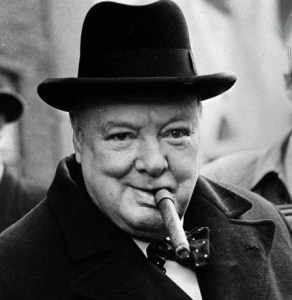
Churchill

Churchill said and wrote a lot of very wise things; if you click here you’ll see a selection.

Tampon Tax

Standard

Two years ago someone in Australia went public with the idea of exempting tampons – known in the trade as ‘feminine protection products’ I believe – from GST (Goods and Services Tax, the Australian equivalent of VAT).

This was presented as a gender equity issue, which was clearly nonsense. But politicians were fearful of opposing a noisy interest group which had potential support from half the electorate. So Joe Hockey, the then-Treasurer who had attracted howls of outrage for announcing the end of the Age of Entitlement, said that he’d consider it; and the Labour Party embraced it, saying that GST on tampons was ‘an anomaly’.

The photo below (by Alex Ellinghausen) shows demonstrators dressed as tampons dancing in front of Parliament House in Canberra.

DancingTampons

Now Bill Shorten, Leader of the opposition Labour Party, has publicly and unambiguously rejected that policy. During an election campaign, with the polls the two major parties neck-and-neck, that shows a degree of courage and leadership and rationality that Australians have been longing for. Click here to see the clip of Bill Shorten (pictured below) giving this straight answer to a straight question.

BillShorten

Good on you, Bill!

Roundism, Patterns and Solar Power

Standard

Last year a posted my thoughts on roundism – our obsession with round numbers: special birthdays, wedding anniversaries and the like. So I thought, “When the meter that records the cumulative output of our solar panels reaches 25,000, I’ll photograph it and put up another post.”

But I missed it. I estimated when the meter would hit 25,000 and then I forgot to go to the garage with my camera.  So I thought, “I know, I’ll wait for 25,252 and do a post about our obsession with patterns and palindromes – and put in a plug for solar power.”  And this time I didn’t forget!

Solar25252_20160322

Solar panel against blue sky

Our 3 kW array of photovoltaic cells was installed on my late mother’s 100th birthday, so I can’t forget the date and I know we’ve been harvesting the sun’s energy for 1,301 days.  That means we’ve averaged 19.4 kWh per day, earning/saving us close to A$6 per day.  That’s like having over A$90,000 invested in 20-year US treasury bills.  And the system cost us only A$6,800, so that’s pretty good.

Sugar Tax

Standard

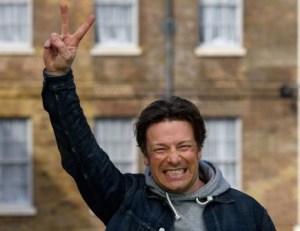
Thanks to long-term lobbying by Jamie Oliver (pictured below in celebratory mood) and others, the UK Government has announced a tiered tax on soft drinks containing more than 5% sugar.  The most popular fizzy drinks are more than 10% sugar.

JamieOliver_Vsign

The tax will not start until 2018 and HMG has not told us what the tax rates will be, but according the CNN “Government documents suggest the tax rate could be equivalent to £0.18 ($0.25) and £0.24 ($0.34) per liter, depending on the sugar content.” This would add a pretty solid percentage to the retail price and yield revenue estimated at £520 million per year.

The policy is supported by an excellent report by a Government agency called Public Health England.

I’m in favour of letting people make their own decisions, good or bad, but I’m also in favour of pricing things to reflect the full cost of their production and consumption. Since excessive sugar consumption imposes enormous costs on society in the form of health care and lost productivity, I consider the Old Country’s sugar tax a partial correction of a market imperfection.

Actually, Mexico has already done it and the evidence suggests that it’s working as intended.  So well done, Mexico. But – unfairly perhaps – people are likely to take more notice of what the UK does, and perhaps emulate it.

Nuclear Waste

Standard

Today is the 5th anniversary of the Fukushima accident.  It comes at a time when my state (South Australia) is contemplating setting up a nuclear waste depository.  Proponents say that this would close the circle of the nuclear fuel cycle, since Australia mines and exports much of the world’s uranium ore.  Opponents point to the obvious risks.

Mrs SG and I have second-hand experience of the consequences of mismanagement in the nuclear industry, having spent two years in Belarus and longer in Ukraine, both countries still heavily affected by the Chernobyl disaster.  But on balance I support continuation and expansion of nuclear power generation and, as a corollary, the reprocessing and safe storage of spent nuclear fuel.

NuclearWasteDrums

I also support South Australia’s entry into this final stage of the fuel cycle. We have a huge area of desert, with no ground water vulnerable to contamination, and stable geology.  And having lost our automotive and most other manufacturing industries, what else are we going to do to maintain our material living standards?

Every economic unit – be it a country, a state, a town, an enterprise or a household – has to find an economic niche where it has an advantage. Saudi Arabia has oil.  Singapore has a great harbour in a great location, a lot of smart people and ready access to cheap labour in neighbouring countries.  New Zealand has sheep and cows and the Tolkien films.

If one’s natural endowments cannot support the lifestyle to which one aspires, one has to look for economic activities that other people don’t want to be involved with. They may be dirty, risky or morally questionable.  In most cases they require changes in policy and law.  I’m thinking of assisted suicide services, driverless cars, drugs trials on human subjects, legalisation of marijuana, storing other countries’ unwanted migrants… and storing other countries’ nuclear waste.

Everything Old . . .

Standard

In the case of Australian taxes, it seems that everything old is new again. Someone has suggested introducing a death tax (aka inheritance tax, death duty or estate duty).  All Australian states used to levy death duties, but all abolished them in 1979.  The Queensland Government led the way in an effort to attract rich old people to take up residence in their state, so the other states had no choice but to follow suit.  Now it’s a new idea.

Capital gains are taxed by the Federal Government at half the individual’s marginal income tax rate.  This simple formula replaced a more complex one by which only real gains were taxed; that is, the acquisition price of the asset was indexed before subtraction from the price realised on disposal.  Now someone is suggesting going back to the old system.  It’s new again.

I’m sure we could find some wonderful old taxes to revive in the name of reform. What about a window tax?

Reckless Adventures

Standard

Did you read about Henry Worsley, the 55-year-old former British soldier who tried to walk across Antarctica solo and unsupported? He was taken ill after 71 days of walking, only 48km from his goal. He was airlifted to Chile for treatment but died of peritonitis.

This is a tragic story and one must admire the courage, determination and resilience of anyone who embarks on such an adventure. In this case Henry Worsley was doing it to raise money for the Endeavour Fund – a charity that helps wounded members of the armed forces.

I don’t know if the donations were curtailed because he didn’t finish the course. What I do know is that other people put themselves in some danger and incurred considerable expense in an effort to save his life. I am not convinced that such adventures, which hit the headlines because they are dangerous, are justifiable; or that others should be encouraged by the media attention that Mr Worsley and the Endeavour Fund have gained to embark on similar enterprises.

My attitude would be different if Mr Worsley’s expedition had been exploratory or scientific in its purpose. But it was intended only to move money from some people’s pockets to those of a charity – a charity whose aims I am in sympathy with, by the way – not to extend human knowledge or develop new resources.

I’m thinking like an economist, I know, and I don’t expect many people to agree with me. What do you think? Am I a narrow-minded materialistic curmudgeon who fails to appreciate the value of celebrating the human spirit? Or am I a level-headed realist who makes a valid distinction between valour and recklessness?

Global Debt

Standard

A shock-horror headline today said that global debt stands at US$200 trillion, which is about 3 times gross global product. A debt:income ratio of 3 is quite modest for a young couple borrowing to buy a home and a car, but for a business or a government it should ring alarm bells.  So should we be alarmed?

Someone drew my attention to a beautiful graphic in the Daily Mail, showing how 11 of those 200 trillions are lent and borrowed among the banking sectors of 16 countries.  It seems that everyone’s lending to everyone else.  Even China and Germany are borrowers and even Greece and Portugal are lenders.

So if everyone defaulted tomorrow… well, there would be a lot of individual winners and losers, but there wouldn’t be any Martians turning up to repossess our planet because we hadn’t kept up our mortgage payments.

What calms me is the fact that the headline is about gross debt. Someone who borrows $100k in order to buy bonds to the same value has given rise to $200k of debt, but their net debt is zero.  Even our heavily mortgaged young couple probably has money in a bank account – effectively a loan to their bank.

Disruptive Technology

Standard

Disruptive technologies are scary.  Uber is one of the scariest, in Australia anyway, because many people have invested 6-figure sums in taxi licences on the assumption that their value can only go up.  Airbnb is another one.  People have invested millions in hotels, meeting all the health, safety, traffic management and other government requirements, only to find that anyone with a spare room is a potential competitor.

My view is simple. In the long run the most efficient way of doing something will always displace the other ways.  Vested interests will howl in pain and rage, and for a while they will hold back the incoming tide.  But eventually, as King Canute found out, they will have to yield.

I remember attending a conference 20+ years ago at which the late James Strong, then CEO of Qantas, argued for a lifting of the ban on Qantas carrying passengers between Australian airports.  The purpose of the ban was to protect the Ansett/TAA duopoly of domestic routes, and it meant that Qantas was flying half-empty ’planes around.  It couldn’t go on forever and it didn’t.  Economic and commercial rationality prevailed – as it must in the taxi and accommodation sectors.

Instead of emulating King Canute, governments should:

  • Create sensible regulatory frameworks for the new technologies, to ensure public safety and payment of taxes.
  • Review the rules and taxes that make it hard for established businesses to compete on equal terms with the disruptors.
  • Ease the pain for the people whose lives and businesses are unexpectedly disrupted, eg by buying back taxi licences.


Science and Technology: How They Advance

Standard

My old friend Ron Allan sent me the following link to an interesting article:

http://www.rationaloptimist.com/blog/the-evolution-of-technology/

The writer, Viscount Ridley, points out that many scientific and technological advances were made by several people, even though we recognise only one.  Darwin comes to mind, and last night Mrs SG and I watched a dramatised documentary (‘Genius’) which presented the perfection of television as a duel between the youthful Philo Farnsworth and Vladimir Zworykin, working for the aggressively entrepreneurial David Sarnoff of RCA.  But I was always taught that TV was invented by John Logie Baird, and Wikipedia lists a regiment of others.

Viscount Ridley goes on to argue that public investment in basic science is largely wasted and it should be left to the private sector.  I’m not sure I agree with that, but please read the article and let me know what you think.