Populism

Standard

The Cambridge Dictionary has chosen ‘populism’ as its Word of the Year. The word doesn’t even appear in my Australian Modern Oxford Dictionary – only a definition of a populist as “a person who claims to support the interests of ordinary people.”

That sounds pretty admirable to me. So why are the words ‘populism’ and ‘populist’ always used pejoratively? Nobody ever says, “That Trump fellow is a real populist. Good for him!” Could it be that the political élite, the pointy-headed intellectuals, the upper middle class people who work in universities, newsrooms and government departments, really do look down on the unwashed masses as Trump and many others claim? Do those people really think they know better what’s good for the common people than the common people themselves?

I have just read an article by Cas Mudde (pictured) in the Guardian Weekly (wishing that I’d thought of that name to give one of my characters in The Eeks Trilogy) in which he argues that what is often called ‘populism’ is really nativism. He goes on to define nativism as “an ideology that holds that states should be inhabited exclusively by members of the native group (‘the nation’) and that non-native people and ideas are fundamentally threatening to the homogenous nation-state;” and characterise it as “nasty.”

This got me thinking about the concept of the nation-state and why it was regarded as such a good thing in the 19th and early 20th centuries; why political heavy­weights in the richest countries of the West now consider it anathema; and why the epithet ‘racist’ is routinely hurled at anyone who expresses a preference for living among people with similar cultural practices, beliefs, values, history and language.

I flipped through a recent issue of the Guardian Weekly and found stories about conflict arising from this preference in six countries: Cameroon, Cyprus, Hungary, Myanmar, Poland and Tibet. And there was a story about German politics, which was dominated for over 40 years by a desire to restore nation-statehood.

Perhaps it’s time for us to be more tolerant of this preference, which seems to be deeply embedded in human nature whether we like it or not.
Life Imitates Monty Python

Standard

We’re used to life imitating art, but sometimes this goes right off any reasonable scale. In the past week I’ve seen four glorious examples, all reported in the good old Adelaide Advertiser.

First, there is the story about a sit-in by Saudi princes to protest against having to pay their own utility bills. The princesses were showing more decorum, it seems. Or perhaps they were otherwise occupied at the motor show for women, soon to be allowed to drive.

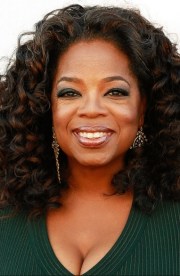
The second story to catch my eye was that Oprah Winfrey is being touted as a potential presidential candidate, on the basis of a speech she made about sexual abuse and harassment in the entertainment industry. Germaine Greer was asked what she thought about it on ABC Radio National, and said that if Ronald Reagan could be President, why not?

Next comes the appalling news that “Struggling families are being deterred from travelling overseas because of the high cost of leaving the country. … Australian passports are the second most expensive in the world, behind those of Turkey.” Has overseas travel really become a necessity of life, in the same category as a flat-screen TV or a smart ‘phone?

Finally, I read about a 50-year-old Australian man called Craig Whitall. He is/was a drug addict with a history of 10 driving disqualifications, 50+ other traffic offences, 9 convictions for unlicensed driving and a 9-year driving ban. While driving home from a methadone clinic he caused an accident that killed 3 people – all members of the Falkholt family. “At what point,” I wondered, “does a sane law enforcement system give up on somebody, lock them up and throw away the key in order to protect everyone else?”

Judo and the KGB

Standard

When President Putin is mentioned in the Western press the phrase ‘former KGB officer’ is often thrown in, presumably to remind readers that this man is smart, wily and not to be trusted. Such a reminder is probably unnecessary. It might be more useful to insert the reminder that he’s a black belt in judo. I Googled ‘principles of judo strategy’ and came up with the following:

Principle #3 Exploit leverage that uses the weight and strategy of opponents against them. Movement and flexibility are prerequisites for judo strategy. They’re crucial to keeping the competition off balance, and they prevent large competitors from dominating smaller, more vulnerable opponents.

This is the principle at the core of President Putin’s success. He looks at the Western allies, which are collectively many times more powerful than the Russian Federation, both economically and militarily. But he sees their weaknesses and understands how to exploit them to his own advantage.

Chief among these weaknesses are democracy, respect for the rule of law, short-termism and a love of comfort. We will make any compromise, betray any promise and scuff out any ‘line in the sand’ to avoid unfavourable poll numbers, shortages, unemployment, encroachment on citizens’ freedoms, accusations of political incorrectness, or armed conflict that might result in a lot of body bags – body bags containing the bodies of our own people, that is.

One could add another to that list: rejection of the nation state as a political ideal. But that’s a big topic that calls for a separate post.

Disclosure: I am working in Ukraine at the moment, and I have every sympathy for Ukraine’s position over Crimea and its eastern parts that are effectively occupied by the Russian Federation. So Vladimir Vladimirovich Putin is not my friend.

Selfies – No, not that kind

Standard

We’d all agree that self-discipline is the best kind of discipline; self-control is the best kind of control; and a degree of self-respect is necessary to win the respect of others.

But self-regard, self-importance, self-satisfaction and self-aggrandisement are to be treated with suspicion. So too, in the world of business anyway, are self-regulation and self-assessment.

This brings me to today’s stroppy-maker: a story in the Sydney Morning Herald about alleged rorting of an Australian tax-break for research and development – a tax-break that involves paying ‘tax offsets’ totalling A$3 billion per year. There is a list of R&D activities that qualify for these offsets.

The picture alongside is taken from that article. It shows Jamie McIntyre, one of the people against whom the allegation of rorting is made, a sum in excess of A$500,000 being mentioned.

“And how,” I hear you ask, “does the Australian Tax Office assess the validity of claims for these offsets?” Ah, well, there’s the rub. It seems the ATO relies on taxpayers to self-assess and, amazingly, some people are motivated by greed rather than an urge to add to the sum of useful human knowledge.

I’m sure you are amazed as I am – and as the ATO and the lawmakers who passed this piece of legislation must be. Who would have guessed that some people are prepared to tell lies in order to swipe an undeserved share from the public purse?

Let’s hope that this revelation – or allegation as I suppose I must call it – provides a valuable lesson in human nature to those who are responsible for managing honest taxpayers’ money.

The word ‘rort’ is an Australian colloquialism for a swindle; or, as a verb, to swindle.

Politicians

Standard

Motherhood used to be the hardest job in the world. Now it’s being a politician in a modern democracy. Their power has waned as that of corporations and lobbyists and special interest groups has waxed, but they are still blamed for everything and subjected to merciless ridicule. Worse, they are accused of dishonesty, usually not with malice but which a casual assumption that the words ‘politician’ and ‘liar’ are pretty much interchangeable.

This is both unfair and dangerous. It’s unfair because the job of a politician is to find ways to make everyone feel that their opinions have been respected and their interests served. This is impossible without saying things that are, at the very least, misleading.

And it’s dangerous because if someone is accused of an offence often enough they will start to think, “Well, if everyone thinks I’m guilty of this terrible thing I might as well be guilty of it!” Let’s call this the Suspected Spouse Syndrome. Are we training our politicians to behave dishonestly, just by letting them know that we expect it?

Fairness

Standard

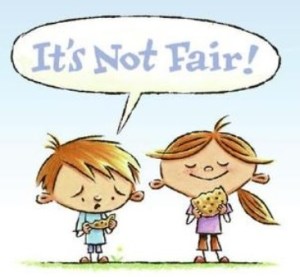
Children develop a sense of fairness from an early age. Hitting someone younger and weaker is unfair. Collective punishments are unfair. Paying pocket money below the going rate, determined by a survey of one’s peers, is unfair.

On Tuesday our Treasurer presented the annual budget to Parliament and announced it to be ‘a fair budget’. ‘Fair’ is now the top buzz-word in Australian politics. The trouble is that the word means different things to different people.

On the left of politics, it means taking more from the rich and distributing it to the non-rich. The exact positioning of the dividing line between the rich and the non-rich is itself a matter for debate of course. Or rather, it is left to each elector to decide which side of the line he or she sits. For most of us ‘rich’ is defined as ‘better off than me’, so policies that involve taking from the rich are generally popular.

But on the right of politics fairness involves allowing people to earn and retain as much as possible of the value of what they produce. According to the Economics textbooks, that value is represented by the wage or profit that the free market assigns. So whether one is a banker, a nurse, a soldier or a casino owner, what you receive is what you’re worth. Obviously it’s unfair to take more from the most productive members of society.

The Economics textbooks support the left-wing view too though. They point out that an extra dollar in a poor man’s pocket does him more good than it would do for a rich man, so the total wellbeing of society will always be increased by redistributing from rich to poor until perfect equality is achieved.

I would rather take ‘fair’ out of the conversation and substitute ‘pragmatic’. The rich always have to pay more (both absolutely and relatively) because, to borrow bank-robber Willie Sutton’s famous quotation, “That’s where the money is.” But the rich are also the most able to find ways to avoid and minimise taxation; or, if paying tax in Country A becomes too onerous, move to Country B.

So it’s a balancing act. Pragmatism is all. To paraphrase a line by Clint Eastwood, “Fair’s got nothin’ to do with it.”

White Australia Policy

Standard

We’ve had a rash of news stories about employees being paid less than the legal minimum wage. In the most extreme cases it has not been an oversight or a one-off try-on, but a business model that works like this:

  • A small-time businessperson buys a franchise from a big company, such as Seven-Eleven.
  • The cost and conditions of the franchise make it impossible to pay legal wages and make a profit.
  • So the franchisee employs foreign students and pays them a fraction of the legal wage. The big company (the franchisor) may give a nod and a wink, or even informally explain how to do it.
  • People on a student visa are allowed to work up to 20 hours per week to help finance their studies, but they are induced to work 40 or more hours per week for 20 hours’ pay. How are they able to do this and study effectively as well? The likely answer is, “They can’t.”.
  • Timesheets are falsified to make the books look right, and the students don’t complain because they are as culpable as their employers: they are breaking the terms of their visas and could be deported.

In revelations of this law-breaking on TV most of the students and most of the franchisees appear to be of South Asian origin. None (that I have seen) appear to be of Anglo-Celtic origin. This observation sent me to my bookshelves to find an old publication called ‘Australia: Official Handbook’. It is dated January 1945 and it was sent by the Repatriation Commission to a new immigrant. The following passage is interesting:

“At the outset it may clear away misconceptions to give a brief outline of the immigration policy that is generally known as the “White Australia” policy.

“To the principle of “White Australia” all political parties in the Commonwealth subscribe, for the economic reason that the white man’s standard of living would be endangered by the introduction of coloured labourers who would be prepared to accept wages and to work and live under conditions that are not acceptable to a white workman.”

I share this without editorial comment.

Brexit

Standard

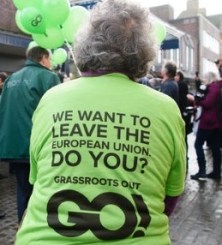
Today is the 193rd day since the Brexit Referendum. This being a prime number, and therefore indivisible, it seems an ironically appropriate day for a post about an event that exposed such deep and lamentable divisions among the people of the United Kingdom.

I didn’t have a vote, having emigrated from the Green and Pleasant Land 38 years ago, but if I had I would have voted Remain. I don’t know whether staying would be better in the long run for the British economy, but I’m pretty sure it would be better for Europe as a whole – economically, politically and in every other way in the short, medium and long run.

brexin brexout

But Joan Williams, a friend from way back whom I respect, voted for Brexit and I asked her why. Her answer had nothing to do with immigration or the NHS. I reproduce it here in full, with Joan’s permission:

“ If you really want to know why I voted leave, it’s basically because I’m afraid I do not think the EU is a good thing. I don’t think the world has outgrown the nation state yet, and that when it does it will not be through the likes of the EU. I love the individual European countries that I know (i.e. Germany, Italy and Spain), and value both our similarities and differences, and don’t see what is gained by trying artificially to weld us all together.

“ I don’t think any supranational institution is better than none, or that being semi-attached to an institution that is heading in the wrong direction is ‘the best of both worlds’. Most importantly, I revere the British constitution, and I don’t take our democratic freedom for granted; the more we compromise and dilute and sacrifice it, the more we are losing it.

“ We achieved our freedom and developed our democracy before anyone else, and it is still the best, and still an example to the world; whereas the EU, in its top-heavy unaccountable over-bureaucratic clumsiness, more resembles the old tired easily-corruptible19th century empires. One doesn’t need to invoke Napoleon: Nicholas II and Franz-Josef are bad enough! It is like choosing to be a dinosaur instead of a mammal. ”

Does anyone else out there feel the same way?

Trump, Tsai and Xi

Standard

Why must we always be the ones to back down and compromise our principles? By ‘we’, by the way, I mean The Liberal Democratic West (LDW for short, not to be confused with LBW).

Taiwan is a country with its own government, socio-politico-economic system, policies and values. It suits many people to maintain the fiction that it’s a renegade province of the People’s Republic of China that will one day be reincorporated into the mainland Chinese polity, but for all practical purposes and for the foreseeable future it is a separate state.

Moreover, the so-called People’s Republic of China under Xi Jinping is going out of its way to behave badly. Whether it’s denying political rights in Hong Kong, flouting international law in the South China Sea, engaging in industrial espionage or dumping dodgy steel products on world markets, China is donning the clothes of a Rogue State.

And why wouldn’t it? It has observed that the LDW will always back down rather that risk a fight – unless its opponent is orders of magnitude weaker. Israel, Russia and Saudi Arabia have got away with murder, so why not China?

That’s why I applaud Donald Trump’s decision to talk to President Tsai of Taiwan (both pictured below, courtesy of AP). Let journalists and political advisors cringe and mouth the doctrine of appeasement. I say, “Enough! What’s the point of spending 4% of your GDP to build and maintain the most powerful military machine in the history of mankind if you always back off rather than risk hurting a few feelings?!”

trumpphoning tsaiphoning

Don’t get me wrong: On almost every issue I am at odds with both Donald Trump and John Bolton (tipped to become his Secretary of State), and I have no appetite for a Third World War. But in this one instance the Donald got it right and John’s endorsement was spot-on. We tried being nice to China and look where it got us. It’s time to try something different.

If Xi Jinping doesn’t like it, let him rant and act offended and threaten to cut off the supply of Barbie dolls.

Elitism

Standard

We used to own a Mitsubishi Magna Elite. It was a very comfortable car, but from the day we bought it (second-hand) it gave us trouble: too many bells and whistles that could go wrong. But who would label a car ‘Elite’ now? Elite, with or without an acute accent, is a dirty word. Elitism is even worse.

Tory Shepherd, one of my favourite News Corp journalists (pictures below), condemned the condemnation of the elite in a well-written article today. Here’s a brief quote from it:

“… the meaning of “elite” has been expanded by angry populists. It is being commonly used to describe (derogatorily) anyone with any power or influence. Or education, or knowledge, or expertise. Elite is all bad, and the Common People are the new superior beings in this new world.”

toryshepherd nshute

You may wonder why Nevil Shute’s picture is alongside Tory’s. He wrote a book in 1953 – coronation year – called ‘In the Wet’, which was largely a diatribe against socialism. Most of the story was set in a future where Australia would have an electoral system in which the better educated and higher achievers had multiple votes. The maximum number of votes was seven, and the seventh vote could be awarded only by the sovereign. The ultimate formalisation of elitism. Perhaps no more then a recognition that people who are smart and successful always have more influence over decision-making than thick losers.

Or do they?

I look back on my own upbringing and education, which was undeniably elitist. I went to the best public school on Merseyside and then to Cambridge University where I joined the Officers’ Training Corps. And at every step I was made aware that I was privileged, and that with privilege came responsibility. I was being trained to serve society, and to see leadership as a form of service.

My original idea of being Prime Minister didn’t come to much, but I think I can claim to have tried to be of service to mankind, or at least to feel guilty about not trying hard enough.

Anyway, I am now firmly of the view that every society needs an elite, which should be selected early enough to be imbued with the ideal of service. This is exactly what happens to every member of the Royal Family of course. (And don’t say, “Which royal family?”!) I refer you to Plato’s Republic, if you haven’t already read it.