Suicide

Standard

People in rich and peaceful countries don’t have enough to worry about, so they look around for irritations and talk them up into Big Issues. This is happening now in Australia with male suicides.

Now, please don’t misunderstand me. I know there are people who kill themselves during fits if depression or in response to tragic events, from which they could have recovered to lead happy lives, and I wish they’d had second thoughts. But there are also people who rationally consider their prospects and their options and decide that they’d rather be somewhere else. They’re not enjoying the party so they want to leave. For those people, suicide is rational and even admirable. Their leaving the party means that the net sum of happiness in the world is increased.

But what makes me stroppy is that the people who are promoting this as a Big Issue in Australia speak as though suicide among Australian men has suddenly become a crisis that has to be moved up the political agenda. Notice my italics. The implication is that Australia is the suicide capital of the world and men are disproportionately affected.

Now consider the following facts, drawn from Wikipedia with a WHO citation and with age standardisation:

  • In a ranking of 171 countries, Guyana is ranked No.1 with 44.2 suicides per 100,000 people in 2012. Australia is at No.63 with 10.6.
  • In every country except two (Pakistan and Iraq) the male suicide rate exceeds the female, typically by a factor of about 3.
  • If we compare Australia with the other countries of the developed Anglosphere (our usual benchmark) it falls pretty much in the middle – see the extracted table below, which includes countries that are tied with those of the Anglosphere for a bit of extra colour.
  • The 17 countries at the bottom of the ranking – ie with the lowest suicide rates – are all located in or around the Caribbean Sea or have predominantly Muslim populations. This has nothing to do with the main theme of my post, but I think it’s a fascinating fact and someone should be doing a PhD thesis on it.

suicidestats

Where it says ‘more info’ you can click and see more if you go to the referenced Wikipedia page.

So how the hell did the UK manage to tie with Swaziland at No.105?! Perhaps most of the unhappy Poms have emigrated.
 

The Pope in Georgia

Standard

The Pope just left Georgia, where Mrs SG and I have been for the past 5 weeks. It’s a friendly, interesting place that has, after a bit of a false start, been the most successful of the former Soviet Republics in making the transition to liberal democratic capitalism. It has an Association Agreement with the EU and is very open to Western ideas, trade and investment. Corruption was almost eliminated under President Mikheil Saakashvili, but is creeping back now, we hear.

popefrancis_thumbsup

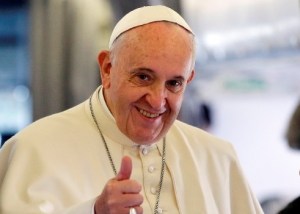
But back to the Pope. As he does everywhere, he performed a mass at a venue that would accommodate the expected crowds – in this case a sports stadium. But only a few thousand turned up. It has been reported that the leadership of the Georgian Orthodox Church, which rejects ecumenism and has 83% of the population as followers, advised those followers not to attend.

Apparently ill-feeling engendered by the Great Schism that split Western and Eastern Christianity nearly 1,000 years ago is still strong in Georgia. The Pope was even greeted by demonstrators carrying insulting placards, written in English. According to eurasianet.org they were members of the Union of Orthodox Parents. The same source cites examples of discrimination against Roman Catholicism and other minority religions.

I feel stroppy about this because Georgia seldom gets mentioned in global news reports, and when it does it’s a pity if the news makes the country appear mean-spirited or downright stupid. I am here to tell you that a handful of religiously-inspired hate-mongers are not representative of the Georgians I have met.

Hitler is History

Standard

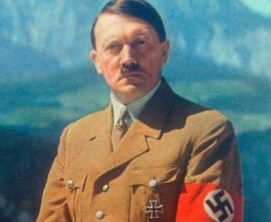
A story in today’s Sydney Morning Herald made me really, really stroppy. A private school in the Northern Territory of Australia encouraged pupils to dress up as literary characters in celebration of Book Week. One pupil chose to dress up as Adolf Hitler. It so happened that a group of exchange students from a Jewish school in Melbourne were present and found this representation of the man who attempted to annihilate their race in Europe confronting.

hitler

Now everyone is falling over themselves apologising and counselling one another and promising it will never happen again.

So why am I stroppy?

First, the presence or otherwise of Jewish children should have no bearing on the case. Hitler was an enemy of mankind and victimised Slavs, Gypsies, homosexuals, the handicapped, Catholic priests… please add to this list as you see fit.

Second, airbrushing events and individuals out of our cultural landscape, and therefore out of the knowledge that we pass down to our children, is a pretty good way of ensuring that the mistakes of the past are repeated in the future.

And third, dressing up as someone does not have to imply endorsement of their character, their politics or their actions. Prince Harry was castigated a few years ago – unfairly to my mind – for going to a fancy dress party as Hitler. Nobody has suggested that he did so because he wanted a revival of Nazism.

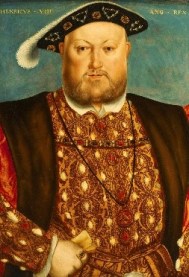
If one goes along with the mock-shock-horror and handwringing that followed an innocent child’s efforts to get into the spirit of Book Week, one should ask oneself which other historical figures should be off-limits. Genghis Khan? Henry VIII?

ghengiskhan henryviii

What about some biblical figures who had a pretty shady reputation when it came to human rights? Moses and Joshua come to mind. How would a descendant of the Canaanites feel if they saw someone dressed as one of those two genocidal criminals? And what about some other unsavoury characters who are still alive and at large?

moses joshua netenyahu

PS   If you think this post is gross, I would point out that it is my 144th.

Understanding Islam

Standard

Sometimes the best that a blogger can do is offer a link to something written by someone else.

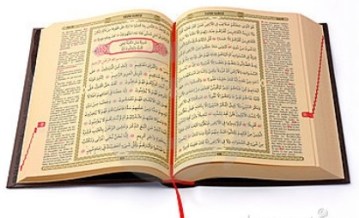
Maher Mughrabi is Fairfax Media’s foreign editor. He was born a Muslim and, although he no longer counts himself a member of that faith, has an insider’s understanding of the compexities and contradictions that permeate the Koran itself, the interpretive work of Muslim scholars, the sectarian divides within Islam and the cultural practices that overlay and underpin people’s perception of what it is to be a Muslim.

Koran

I commend this piece that was published by Fairfax Media today. It contains links to some of Maher’s other writings. If you share my curiosity about this diverse, dynamic and problematic religion, and its adherents, please take the time to read some of them.

Maher mentions Pauline Hanson, who says she is studying the Koran to gain a better understanding of Islam. She will be familiar to Australian readers, but others may want to read about her at her own website or at Wikipedia.

Burkinis

Standard

OK, I know what you’re thinking: When is StroppyGit going to pronounce on the row in France over burkinis? Never let it be said that I am insensitive to popular demand, so here goes.

First, I completely agree with those who see the burka as an instrument and a symbol of patriarchal oppression of women. The great majority of women who choose to wear it do so because of the cultural/religious environment into which they had the misfortune to be born. Muslim women who live in Western societies and wear the burka in public must expect to have difficulty making friends and getting a job. They should also realise that they are reinforcing prejudice and hostility against their religion, whose values with respect to gender relations are utterly opposed to modern secular values. In any situation where security is an issue, faces must be revealed and body searches must be submitted to.

Having said all that, it does not follow that a bathing costume that covers everything except the face, hands and feet should be banned. Yes, it may be provocative inasmuch as it is associated with Islam, and most non-Muslims find aspects of Islam objectionable. But is it a religious symbol, in the way that a cross or a crescent or the star of David are religious symbols? I don’t think so. I see it rather as a cultural by-product that will fade away as the culture that spawned it matures.

I like this photo, by the way, which I took from a website – but I forget which one. If it was yours, or if you took the photo, please tell me and I will add an acknowledgement. It’s brilliant because of the almost-exact equivalence of the two women’s figures and movements; the matched horizontal stripes on both costumes; and most of all the happy smile on the face of the burkini-wearing woman. Well done, whoever took it.

Burkini

Being practical, the case is very clear. Banning the burkina is even more provocative than wearing it. Making Muslim women display an amount of flesh that is for them unthinkable will simply amount to a ban on their being part of the beachloving community and enjoying the healthy pastime of swimming in the sea. It will further isolate those women from mainstream secular society and retard their advance towards enlightenment and freedom. And it is a propaganda gift to the Islamists who want to portray Western society as hostile, corrupt and ungodly.

StroppyGit has spoken.

Intelligent Design

Standard

I am a writer of science fiction – or social science fiction, as I have redefined my chosen genre in an as-yet unsuccessful attempt to create a new market in which I am the sole supplier. Apart from pitifully low sales figures, my main concern is that science fact will overtake me, leaving my speculative, imaginative, provocative stories looking like ho-hum period pieces.

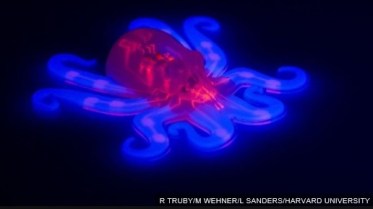
This concern of mine was reinforced today by two stories at the BBC’s admirable website. One is about a self-contained robotic octopus made of jelly-like materials, intended as a prototype of something that will one day perform autonomously and slither into spaces that robots with rigid components cannot. It’s a good read.

RoboticOctopus

The other story is about the future evolution of our species. The idea is that we have evolved as far as we can by means of natural selection, which is in any case too slow for our immediate needs. We now have to design and make our own evolutionary adaptations, which will almost certainly entail combining organic and inorganic elements. This story is very short and told audio-visually.

SHAMELESS PLUG

If those stories pique your interest in what I’ve been writing, and if you’re willing to buy and read e-books, you can get my trilogy of books in an omnibus edition called ‘Goldiloxians’ at all the major e-book retail platforms. Here are two links:

Goldiloxians’ at Amazon/Kindle

Goldiloxians’ at Smashwords

Olympic Medals

Standard

I hope I’ve waited long enough since the closing ceremony to make a stroppy comment about the Olympic Games. Actually, it’s not about the Games themselves; it’s about the way certain nations have reacted to the medal tally:

MedalTally

More particularly, it’s about the one-eyed jingoism in the UK (whose athletes are described as Team GB, pointedly excluding any from Northern Ireland) and the public hostility to Australian athletes who failed to justify the huge public investment in their training by winning gold medals. If you find the latter hard to believe, read this article at the news.com.au website headed ‘Is Australia’s disastrous Olympic campaign really $340 million well spent?’

Just like diplomacy, the Olympics have become ‘war by other means’. Rich countries spend huge amounts of public money on employing and training elite athletes, and then claim their position in the medal tally as an indicator of national worth. Is it really more important to British people that Team GB’s gold medal count exceeded China’s (and Germany’s and Japan’s and France’s) than that British athletes strove to do their best against their peers and fell below 3rd place with good grace? Do Australian taxpayers really think the Games are about buying medals?

We all know what comes next. China will launch a massive expenditure programme to ensure that they come 2nd in 2020. The Japanese will do likewise to ensure that, as the host nation, they at least come 3rd.

Finally, I hope that calls for British people to buy lottery tickets as an act of patriotism, because much of the investment in athletic prowess was funded from the National Lottery, will cease. What if the main contributors were manufacturers of junk food, fizzy drinks and tobacco? Or importers of cocaine? Or brothel-keepers?

PrEP

Standard

PrEP stands for Pre-Exposure Prophylaxis – a combination of two medicines (tenovir and emtricitabine, sold under the trade name Truvada) that greatly reduces the risk of HIV infection. It is a prescription drug taken daily by people who are at high risk of infection. According to the US Centers for Disease Control (CDC) the risk reduction is at least 90% for sexual transmission of HIV and at least 70% for injected drug use.

I’m in the UK at the moment and a big news story has been the dispute over who should pay for PrEP. The disputants were the National Health Service (NHS) and the local authorities. The NHS argued that it was a public health issue, so the local authorities should pay. The local authorities argued that they couldn’t afford it. The judgement came down against the NHS.

So what is there to get stroppy about? Well, it seems to me blindingly obvious that the cost of PrEP should be born by the individuals who need its protection. The pills cost GBP13 (USD17) per day. This is as much as five café-bought cups of coffee every day. That’s a lot of money, but I’d hazard a guess that a drug habit costs more. And for people at risk of sexual transmission, good old-fashioned condoms are a very affordable alternative.

This point was made in a Radio 4 interview with a lobbyist. She seemed affronted and said that it was not always practicable to use a condom every time one has sex. By way of elaboration she said that people were often too drunk to remember to use a condom. Finally, in words that could have been crafted to create maximum stroppiness, she said that if taxpayers declined to pay for PrEP they would be up for much higher expense to treat HIV-positive people. “That sounds like blackmail,” said the interviewer. The lobbyist disagreed.

Sometimes public policy should not be based simply on cash flow projections. Principles should come into the picture too. Every time a principle – the principle of personal responsibility, for example – is violated in favour of financial pragmatism it becomes harder to invoke that principle the next time.

National Stereotype Conformance Syndrome

Standard

People tend to conform unconsciously to their national stereotypes when they are abroad or when they are interacting with foreigners. The Italians behave excitedly; the Germans are stolid and efficient; the British are polite and orderly (unless they are football hooligans, who constitute a special case outside the scope of this post).

I saw a great example of this today. Mrs SG and I are on a cruise in the Baltic and this morning we went ashore in St Petersburg. We had already gone ashore in Denmark, Sweden and Finland, where immigration formalities were handled by P&O and we just tripped down the gangway clutching our cameras, but in Russia we had to go through Immigration Control. I cannot speak for all the immigration officers but ours was straight from Central Casting: she was surly, unsmiling and rude.  (This is a stock photo of a male immigration officer, just to add a little atmosphere and colour.)

RussianImmigOfficer

That may be her natural disposition of course, but I prefer to believe that she is normally sunny, charming and witty, given to practical jokes and uploading kitten videos to YouTube. It’s only when she puts on her uniform and has to represent her country to a shipload of foreigners that a voice in her head says, “Now then, Natasha, you are a Russian official. You know what people expect from you. Don’t let them down!”

I have met one immigration official who was ruder than Natasha (that’s not her real name by the way – or perhaps it is, I don’t know her real name). It happened when I crossed the border from Ukraine into Transnistria. Transnistria is a sliver of Moldovan territory occupied by rebels who, since they are of Russian ethnicity, enjoy Russian Government protection. National Stereotype Conformance Syndrome again.

Have you seen other examples of NSCS? Please share them!

PS I should add that we encountered only friendly people once we had passed through Immigration Control. There was the man at an open-air bar beside a public toilet, who didn’t want to change a dollar bill but gave us 20 roubles out of the till so we could have a pee. Three young soldiers were happy to pose for a photo with Mrs SG beside the historic warship Aurora. When we tried to blow our few remaining roubles on ice-creams outside the Hermitage our three scoops weighed more than we could afford – so the man carefully scraped some back into his tub and re-weighed. When the bill came to less than our little pile of notes and coins he insisted on giving us the proper change (which was enough for another pee-and-a-half).

Council Cuts and Churchill

Standard

Mrs SG and I are visiting Southampton, on the south coast of England. This afternoon we went to the art gallery. Seeing something resembling a pay-point we asked if there was an entry fee.

“No,” said the man on duty, “It’s completely free. But I should warn you that we close at 3 o’clock.” I glanced at my watch. It was 2:40.

“Is that because it’s Monday?” I asked.

“No. We’re open from 10 to 3 Monday to Friday, and to 5 on Saturday.” Seeing my expression he added apologetically, “Council cuts.”

We nodded to show our understanding and hurried off to see as much as we could. Beside one painting was a Churchillian quotation that was new to us:

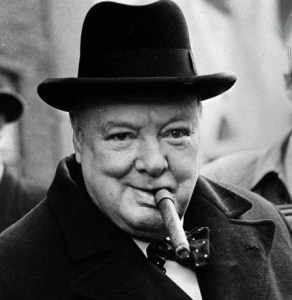
“The arts are essential to any complete national life. The State owes it to itself to sustain and encourage them. Ill fares the race which fails to salute the arts with the reverence and delight which is their due.”

There’s an irony there, I think.

I also think it insane to invest huge sums of money in great public buildings, fill them with valuable works of art, and then open the doors for only 32 hours per week to the people whose money paid for those investments.

Churchill

Churchill said and wrote a lot of very wise things; if you click here you’ll see a selection.