Consumption Tax

Standard


In Australia we have one of the lowest consumption taxes in the world: 10%. It’s a value-added tax (VAT) but, like New Zealand, we call it a goods and services tax (GST)

In principle such taxes are supposed to be levied on everything, at as low a rate as possible, so as to be non-distorting. But when it was introduced in 2000 it had been mauled in Parliament and many goods and services were exempted. I blame the Greens for the mauling, but that may not be wholly fair.

One consequence has been that special interest groups have been able to characterise it as a ‘luxury tax’ because it’s not applied to things like fresh and minimally processed food (eg milk and cheese). I have posted before about the absurd campaign to exempt feminine hygiene products: the phrase ‘tampon tax’ is unfortunately alliterative, lending itself to sloganeering.

Out of interest, I have kept all my receipts over the past 5 weeks, to see how much GST I’m actually paying. Excluding household utilities, I have spent $598.74, of which $19.65 was GST. This means an average rate of 3.4%. If I hadn’t bought a case of wine it would have been 2.0%.
Doing Right by Sheep

Standard

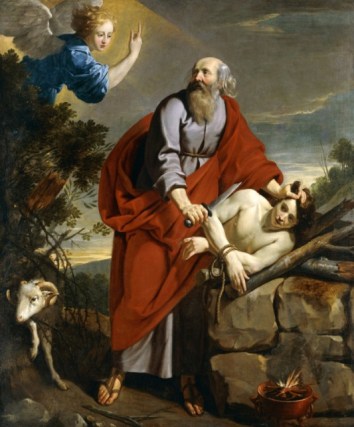
Australia exports about 2 million live sheep per year, 95% of them to the Middle East. Demand peaks before Eid-ul-Fitr, when devout Muslims slaughter animals in imitation of Abraham’s sacrifice of a lamb in place of his son Ishmael (Quran: Surah 37, verses 99–109) or Isaac (Bible: Genesis 22, verses 1–2). It’s a gruesome story, so don’t read it if you’re at all squeamish; in fact, don’t even look at the picture below.

Transporting live animals across large expanses of ocean is a gruesome business too. Every so often the Australian public is shown evidence of extreme cruelty to animals, whereupon government agencies and lobbyists express outrage and give assurances that rules will be tightened, enforcement will be strengthened and it will never happen again. And then it does.

The latest shock-horror story is about a shipload of sheep bound for the Middle East. We are told that more than 2,000 of them died of heatstroke and thirst.

I will not lapse into a diatribe against archaic, barbaric and horrific practices in the name of religion, which might attract accusations of antisemitism and islamophobia. I will simply draw a parallel between the export of live animals in appalling conditions, just so that they can be killed somewhere else, and the slave trade.

An interviewee from the livestock industry conceded that there was inevitable cruelty in the raising, transporting and slaughter of animals people like to eat, but pointed out that many Australian jobs depend on this economic activity. I imagine that slave traders were making similar statements 200 years ago.

Life Imitates Monty Python

Standard

We’re used to life imitating art, but sometimes this goes right off any reasonable scale. In the past week I’ve seen four glorious examples, all reported in the good old Adelaide Advertiser.

First, there is the story about a sit-in by Saudi princes to protest against having to pay their own utility bills. The princesses were showing more decorum, it seems. Or perhaps they were otherwise occupied at the motor show for women, soon to be allowed to drive.

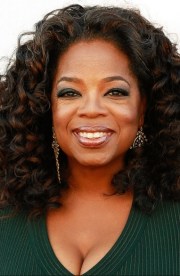
The second story to catch my eye was that Oprah Winfrey is being touted as a potential presidential candidate, on the basis of a speech she made about sexual abuse and harassment in the entertainment industry. Germaine Greer was asked what she thought about it on ABC Radio National, and said that if Ronald Reagan could be President, why not?

Next comes the appalling news that “Struggling families are being deterred from travelling overseas because of the high cost of leaving the country. … Australian passports are the second most expensive in the world, behind those of Turkey.” Has overseas travel really become a necessity of life, in the same category as a flat-screen TV or a smart ‘phone?

Finally, I read about a 50-year-old Australian man called Craig Whitall. He is/was a drug addict with a history of 10 driving disqualifications, 50+ other traffic offences, 9 convictions for unlicensed driving and a 9-year driving ban. While driving home from a methadone clinic he caused an accident that killed 3 people – all members of the Falkholt family. “At what point,” I wondered, “does a sane law enforcement system give up on somebody, lock them up and throw away the key in order to protect everyone else?”

Selfies – No, not that kind

Standard

We’d all agree that self-discipline is the best kind of discipline; self-control is the best kind of control; and a degree of self-respect is necessary to win the respect of others.

But self-regard, self-importance, self-satisfaction and self-aggrandisement are to be treated with suspicion. So too, in the world of business anyway, are self-regulation and self-assessment.

This brings me to today’s stroppy-maker: a story in the Sydney Morning Herald about alleged rorting of an Australian tax-break for research and development – a tax-break that involves paying ‘tax offsets’ totalling A$3 billion per year. There is a list of R&D activities that qualify for these offsets.

The picture alongside is taken from that article. It shows Jamie McIntyre, one of the people against whom the allegation of rorting is made, a sum in excess of A$500,000 being mentioned.

“And how,” I hear you ask, “does the Australian Tax Office assess the validity of claims for these offsets?” Ah, well, there’s the rub. It seems the ATO relies on taxpayers to self-assess and, amazingly, some people are motivated by greed rather than an urge to add to the sum of useful human knowledge.

I’m sure you are amazed as I am – and as the ATO and the lawmakers who passed this piece of legislation must be. Who would have guessed that some people are prepared to tell lies in order to swipe an undeserved share from the public purse?

Let’s hope that this revelation – or allegation as I suppose I must call it – provides a valuable lesson in human nature to those who are responsible for managing honest taxpayers’ money.

The word ‘rort’ is an Australian colloquialism for a swindle; or, as a verb, to swindle.

Fairness

Standard

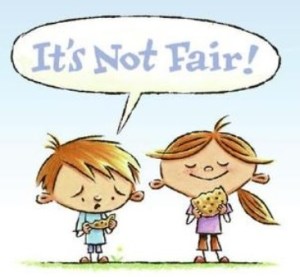
Children develop a sense of fairness from an early age. Hitting someone younger and weaker is unfair. Collective punishments are unfair. Paying pocket money below the going rate, determined by a survey of one’s peers, is unfair.
On Tuesday our Treasurer presented the annual budget to Parliament and announced it to be ‘a fair budget’. ‘Fair’ is now the top buzz-word in Australian politics. The trouble is that the word means different things to different people.

On the left of politics, it means taking more from the rich and distributing it to the non-rich. The exact positioning of the dividing line between the rich and the non-rich is itself a matter for debate of course. Or rather, it is left to each elector to decide which side of the line he or she sits. For most of us ‘rich’ is defined as ‘better off than me’, so policies that involve taking from the rich are generally popular.

But on the right of politics fairness involves allowing people to earn and retain as much as possible of the value of what they produce. According to the Economics textbooks, that value is represented by the wage or profit that the free market assigns. So whether one is a banker, a nurse, a soldier or a casino owner, what you receive is what you’re worth. Obviously it’s unfair to take more from the most productive members of society.

The Economics textbooks support the left-wing view too though. They point out that an extra dollar in a poor man’s pocket does him more good than it would do for a rich man, so the total wellbeing of society will always be increased by redistributing from rich to poor until perfect equality is achieved.

I would rather take ‘fair’ out of the conversation and substitute ‘pragmatic’. The rich always have to pay more (both absolutely and relatively) because, to borrow bank-robber Willie Sutton’s famous quotation, “That’s where the money is.” But the rich are also the most able to find ways to avoid and minimise taxation; or, if paying tax in Country A becomes too onerous, move to Country B.

So it’s a balancing act. Pragmatism is all. To paraphrase a line by Clint Eastwood, “Fair’s got nothin’ to do with it.”

Brexit

Standard

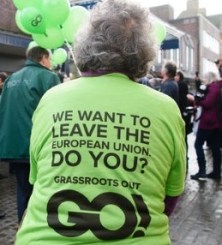
Today is the 193rd day since the Brexit Referendum. This being a prime number, and therefore indivisible, it seems an ironically appropriate day for a post about an event that exposed such deep and lamentable divisions among the people of the United Kingdom.

I didn’t have a vote, having emigrated from the Green and Pleasant Land 38 years ago, but if I had I would have voted Remain. I don’t know whether staying would be better in the long run for the British economy, but I’m pretty sure it would be better for Europe as a whole – economically, politically and in every other way in the short, medium and long run.

brexin brexout

But Joan Williams, a friend from way back whom I respect, voted for Brexit and I asked her why. Her answer had nothing to do with immigration or the NHS. I reproduce it here in full, with Joan’s permission:

“ If you really want to know why I voted leave, it’s basically because I’m afraid I do not think the EU is a good thing. I don’t think the world has outgrown the nation state yet, and that when it does it will not be through the likes of the EU. I love the individual European countries that I know (i.e. Germany, Italy and Spain), and value both our similarities and differences, and don’t see what is gained by trying artificially to weld us all together.

“ I don’t think any supranational institution is better than none, or that being semi-attached to an institution that is heading in the wrong direction is ‘the best of both worlds’. Most importantly, I revere the British constitution, and I don’t take our democratic freedom for granted; the more we compromise and dilute and sacrifice it, the more we are losing it.

“ We achieved our freedom and developed our democracy before anyone else, and it is still the best, and still an example to the world; whereas the EU, in its top-heavy unaccountable over-bureaucratic clumsiness, more resembles the old tired easily-corruptible19th century empires. One doesn’t need to invoke Napoleon: Nicholas II and Franz-Josef are bad enough! It is like choosing to be a dinosaur instead of a mammal. ”

Does anyone else out there feel the same way?

Cheap Coffee

Standard

Frosts in Brazil, civil wars in Africa… whatever’s happening on the supply side one can be sure that a kilogramme of your average branded instant coffee is going to cost at least US$25/kg retail (compared with US$2.15/kg for robusta coffee beans in bulk).

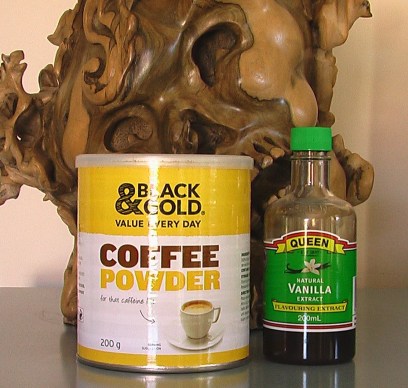
I tend to wait for specials and then buy a big jar of can – or buy supermarket ‘own brand’ coffee. I did this last week and it was pretty awful stuff. Today I experimented by putting a drop of vanilla essence in the cup and my consumer experience was transformed!

coffeevanilla

So here’s my Economical Household Management Tip for December. Buy the cheapest coffee you can find and a little bottle of vanilla essence. Do this over your whole adult lifetime, invest the savings wisely, and you could have enough for a funeral that will be the envy of your friends. The ones who outlive you, anyway.

Trump

Standard

I know, I know. It’s high time I made a pronouncement on the US presidential election. On this occasion I defer to another deep thinker, because he expresses my own thoughts more eloquently than I can express them myself.

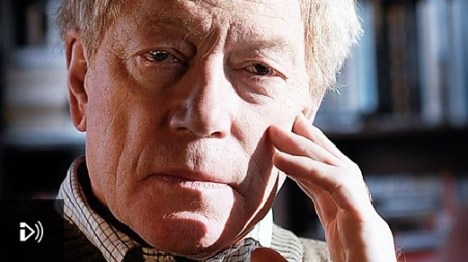
Philip Welsby, my relation-by-marriage, has drawn my attention to a 10-minute talk by Sir Roger Scruton that was broadcast by the BBC and may still be heard at the BBC website. Sir Roger (pictured below) explains, dispassionately and succinctly, what went wrong for the US political class and why Donald Trump is President Elect. I found myself agreeing with everything in his talk and I recommend it.

rogerscruton

Interest Rates

Standard

Monetarism was in the early stages of its ascendancy when I was studying economics. I remember one of my lecturers describing Milton Friedman, doyen of the Chicago School, as “that amiable fascist.” Now we are living with the fall-out of Governments’ delegating economic management to their central banks and using fiscal policy as a means of appeasing noisy interest groups and winning elections.

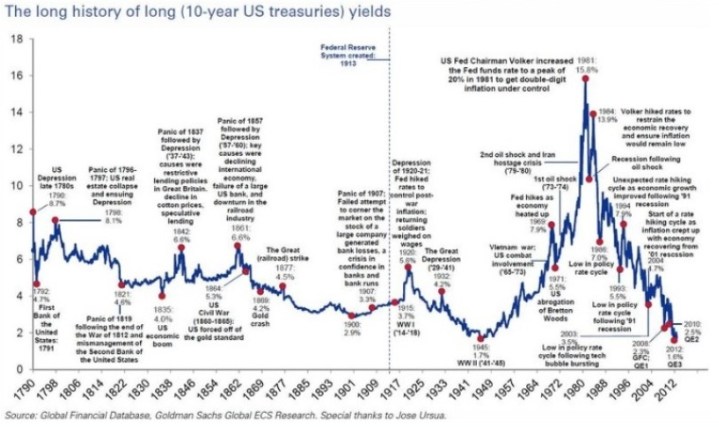
I came across this graph yesterday and felt I should share it:

ustreasury10yieldgraph

If this is how interest rates have to behave – even dipping into negative territory currently in Denmark, Japan, Sweden and Switzerland – to balance inflation and economic growth, we should all be on the lookout for flying pigs and white rabbits with pocket watches.

PrEP

Standard

PrEP stands for Pre-Exposure Prophylaxis – a combination of two medicines (tenovir and emtricitabine, sold under the trade name Truvada) that greatly reduces the risk of HIV infection. It is a prescription drug taken daily by people who are at high risk of infection. According to the US Centers for Disease Control (CDC) the risk reduction is at least 90% for sexual transmission of HIV and at least 70% for injected drug use.

I’m in the UK at the moment and a big news story has been the dispute over who should pay for PrEP. The disputants were the National Health Service (NHS) and the local authorities. The NHS argued that it was a public health issue, so the local authorities should pay. The local authorities argued that they couldn’t afford it. The judgement came down against the NHS.

So what is there to get stroppy about? Well, it seems to me blindingly obvious that the cost of PrEP should be born by the individuals who need its protection. The pills cost GBP13 (USD17) per day. This is as much as five café-bought cups of coffee every day. That’s a lot of money, but I’d hazard a guess that a drug habit costs more. And for people at risk of sexual transmission, good old-fashioned condoms are a very affordable alternative.

This point was made in a Radio 4 interview with a lobbyist. She seemed affronted and said that it was not always practicable to use a condom every time one has sex. By way of elaboration she said that people were often too drunk to remember to use a condom. Finally, in words that could have been crafted to create maximum stroppiness, she said that if taxpayers declined to pay for PrEP they would be up for much higher expense to treat HIV-positive people. “That sounds like blackmail,” said the interviewer. The lobbyist disagreed.

Sometimes public policy should not be based simply on cash flow projections. Principles should come into the picture too. Every time a principle – the principle of personal responsibility, for example – is violated in favour of financial pragmatism it becomes harder to invoke that principle the next time.