It may not be all to do with having too many people making coffee for other people who could boil a kettle and make themselves a cup of caffeine-rich brown liquid in much less time than they have to wait for an expert to do it for them with a hissing big machine and put a beige heart-shape on top. In the last few days I have had a cluster of revelatory experiences . . .
It’s rare for an email to go astray, and when it does happen one usually gets an ‘undeliverable’ notification. But it’s now common not to get a reply. It’s called “ghosting”. A month ago I sent five emails to businesses that had expressed some interest in sponsoring my Lions Club’s art show last year – but only when the impact of Covid-19 had passed. Not a single one replied, even to say, “Sorry, times are still bad.” Or “Buzz off or I’ll call the cops.” Nothing. So I’m wasting time following up: “Perhaps my email of 9 June found its way into your Junk folder…”
Twice in the last week I’ve had occasion to contact private companies and been told, “Oh, the person responsible for that is away for a month.” I gently suggested that a) I was talking to that person’s deputy and b) even if so-and-so was physically away they probably still had access to a telephone and an inbox. I refrained from any sarcastic mention of carrier pigeons. “Yes, but I’ll have to wait for so-and-so to come back to give you a definite answer.” People are scared to take responsibility.

I attended a first aid class (CPR and defibrillator operation) run by a very well-known NGO. It ended with a practical test and… Hurrah! All fifteen of us passed! No we jolly well didn’t, not really. We got certificates for showing up and paying a fee. If that applies in other fields… well, perhaps that’s why people are afraid to take responsibility: they know they’re not competent.
My bag was searched at the Aldi check-out. I had some mixed grain wraps in there, just purchased from a rival shop where I had declined a receipt. Fortunately the brand was one that Aldi doesn’t sell or I might have been writing this in a cell. I understand: shoplifting is on the rise, forcing businesses to divert resources to strengthening security.
I was just notified that an old class action against a company that had misled its shareholders had been settled, and Mrs SG’s and my pension fund had benefited to the tune of $1,090.60. How many hours of costly people’s time had been expended on achieving that movement of money from one set of pockets to another set (mainly in the well-cut suits of lawyers)?
This week I spent half-a-day shopping around for cheaper electricity, having been informed in a curt email that my tariff was about to increase from 34.96 to 49.5c/kWh. Disingenuously I phoned to report an apparent misprint, and was told, “No, that’s the rate you’ll be charged if you do nothing, but I can offer you a special rate. And if you can find an even better one with another supplier, come back to us and re-negotiate.” I shopped around, found a better rate and took it. Life’s too short to bugger about endlessly. ’Scuse my French.
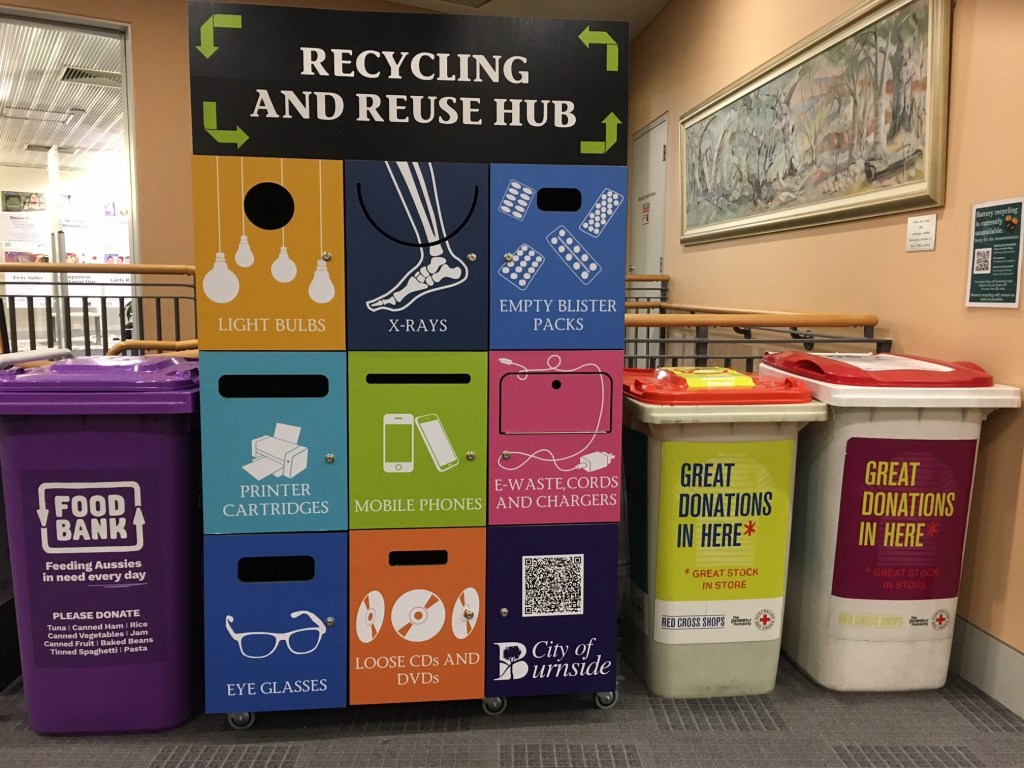
We used to put all our rubbish in the dustbin. Now we have three wheelie-bins: Green for organic waste; Yellow for stuff that can be recycled; and Red for real rubbish destined for landfill. If one is conscientious, getting it right takes time. And the last time I was in our local civic centre I saw this Recycling Hub! Don’t get me wrong, I like it, and I tipped several dozen blister-packs (bonded plastic and metal, hard to separate) into the top right-hand slot. But this means more person-hours spent unproductively – not in producing goods and services that people want.





 There is an upsurge of guilty feelings about slavery, especially in the UK. Statues of people who made fortunes from that evil trade in the eighteenth and nineteenth centuries have been wrenched from their plinths. There is agitation to re-name city streets – even Liverpool’s
  But there are conditions of employment that have become normal, but in some respects are worse than slavery. If one has paid for and owns a slave, one has an interest in keeping him or her fed, clothed, housed and healthy. I think of the ‘labour lines’ on a
  here was a programme on
  t it makes me stroppy. Why? Because the cost of your risky behaviour will be borne in part by the wider community, therefore the community has a right to restrict your risk-taking. Even if you have top-shelf private health insurance the cost of hospitalising you, treating you and perhaps cremating you will fall on your fellow policy-holders.
 ave noticed that substituting the word “flaunt” for “flout” has moved from being an occasional slip of the tongue towards becoming the norm. It’s joining the ranks of “A bacteria”, “Between you and I, me and Jim are going steady” and “You can’t underestimate the importance of climate change”. Is this happening only in Australia, or it is a verbal pandemic? If so, is anyone working on a vaccine?
 I live in Australia, where we have a Prime Minister (
 Now I’ll come to the point. As well as making amicable noises about our common values and regional interests while she was here, Jacinda raised in public a very sharp-edged issue. Many New Zealanders live in Australia and some run foul of the law. If they are imprisoned for a year ior more, and have not obtained Australian citizenship, they are expelled to New Zealand on their release. Most of these people are long-term Australian residents and have little if any connection with New Zealand; in some cases they came here as babies. Jacinda Ardern asserts – reasonably in my view – that these people have made Australia their home and should be accepted as Australia’s problem. She threatened to introduce a reciprocal law in New Zealand if we did not change ours.
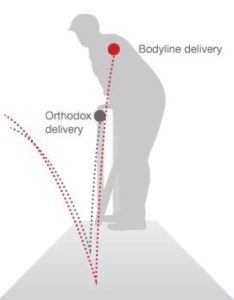 The friendship between Australia and Britain has never been so strained as when, in 1932-33, the English cricket team toured Australia.
 Two members of the English team were particularly blamed and vilified as unsportsmanlike: Captain




 StroppyGit