Hair

Standard

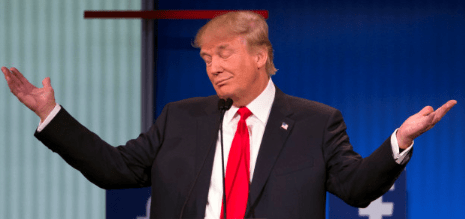
Who is the most reviled man in the world at the moment? There are quite a few candidates, but I think a global vote would put Kim Jong Un at the top of the list: he of the unbecoming and widely derided hairstyle. (No, not that hairstyle, you’re thinking of Donald Trump.)

But what do I see as I walk the streets and the airport transit lounges, when I glance through the windows of barbers’ shops, when I see news clips on TV? Every male human under the age of 30 seems to want to emulate this hated man! Even little boys, for whom the choice of hairstyle is presumably made by their mothers, have shaved sides and bushy tops!

I’m old, I know, and out-of-touch. I’ve given up hoping that I’ll ever really understand the human race. But can anyone explain this bizarre phenomenon to me?

Are They Terrorists?

Standard

Communists are devoted to the ideology of Communism. Capitalists snuffle at the trough of Capitalism. Platonists follow the philosophical teachings of Plato.

But what about arsonists, cyclists and saxophonists? They are –ists without –isms. So it is with terrorists. ‘Terrorism’ is not an ideology or a philosophy. Terrorists are simply bad people employing a tactic of war, designed to demoralise an enemy and sap his will to fight. When good people employ this tactic they call it ‘shock and awe’.

So are the Muslims who drive vans at unsuspecting people or set off suicide vests in crowded places terrorists? I don’t think they are, not in the literal sense of the word. They do not seek to create terror, but hatred – hatred of Muslims.

This is not my own original thought. It is the published strategy of Daesh, which recognises three kinds of Muslim. There are the fanatical fundamentalists who support, fund and fight for Daesh’s cause. At the other end of the spectrum are the morally corrupt people who call themselves Muslims but are no better than Infidels: men who drink beer and women who wear makeup, and most of the royals who run the Middle East.

In the middle are the silent majority of Muslims who sort-of believe the dogma and sort-of observe the rituals, much as most people who were brought up Christian sing Christmas carols and eat hot cross buns, but are more interested in giving their children a good education, paying off the mortgage and going somewhere nice on holiday. This is the target. The silent majority. Daesh’s aim is to create hatred of them, causing them to feel alienated and eventually withdraw from the secular societies they have happily inhabited.

If all goes according to plan they will withdraw into the welcoming arms of the True Believers, who will take their children into their madrassas, veil their adolescent daughters, and teach their adolescent sons the take revenge on the societies that rejected them.

So the way to thwart them is to refuse to hate.

There is a terrible battle going on within Islam – or rather several terrible battles, very like the battles that raged in Christendom 500 years ago. They may take as long to be resolved. They may never be resolved. But if there is a way for the rest of us to hasten a happy outcome, it will involve engaging with and supporting the people whose values most closely resemble our own.

Judo and the KGB

Standard

When President Putin is mentioned in the Western press the phrase ‘former KGB officer’ is often thrown in, presumably to remind readers that this man is smart, wily and not to be trusted. Such a reminder is probably unnecessary. It might be more useful to insert the reminder that he’s a black belt in judo. I Googled ‘principles of judo strategy’ and came up with the following:

Principle #3 Exploit leverage that uses the weight and strategy of opponents against them. Movement and flexibility are prerequisites for judo strategy. They’re crucial to keeping the competition off balance, and they prevent large competitors from dominating smaller, more vulnerable opponents.

This is the principle at the core of President Putin’s success. He looks at the Western allies, which are collectively many times more powerful than the Russian Federation, both economically and militarily. But he sees their weaknesses and understands how to exploit them to his own advantage.

Chief among these weaknesses are democracy, respect for the rule of law, short-termism and a love of comfort. We will make any compromise, betray any promise and scuff out any ‘line in the sand’ to avoid unfavourable poll numbers, shortages, unemployment, encroachment on citizens’ freedoms, accusations of political incorrectness, or armed conflict that might result in a lot of body bags – body bags containing the bodies of our own people, that is.

One could add another to that list: rejection of the nation state as a political ideal. But that’s a big topic that calls for a separate post.

Disclosure: I am working in Ukraine at the moment, and I have every sympathy for Ukraine’s position over Crimea and its eastern parts that are effectively occupied by the Russian Federation. So Vladimir Vladimirovich Putin is not my friend.

Cowards?

Standard

“Prepare for more pain YOU COWARD.” That’s the 5cm-high headline on page 9 of today’s Sunday Mail. The ‘coward’ referred to is Riduan Isomuddin (aka Hambali), the suspected mastermind of the 2002 Bali bombings, who’s been in Guantanamo for more than 10 years.

Increasingly, world leaders and commentators have been attaching the ‘coward’ label to suicide bombers and perpetrators of other atrocities, and I’m not sure that it’s appropriate.

Whatever one thinks of these people and their motives, and the puppeteers who pull their strings, I don’t think they’re cowards. They have to overcome their instinct for self-preservation, for one thing; and their instinctive empathy for fellow humans. Killing oneself and killing other people takes courage.

But, you may say, if a crime is committed in the name of Islam the perpetrator is promised great rewards in Paradise. True, but what if his suicide vest fails? What if he’s shot but not killed? He faces the prospect of spending the rest of his life locked up, maybe maimed, probably celibate, hoping that failure to complete his mission does not disqualify him from receiving a martyr’s prize.

And surely some of them must consider the possibility that the men who made those promises are themselves misguided – or even liars. Then they face eternity in Hell.

No. I see foolishness, I see wickedness, but I don’t see cowardice.

Does it matter what epithets we throw at them? I think it does. Unless we correctly characterise their crimes and their motivation we cannot counter them effectively.

Sorry: I can think of no suitable picture to include in this post.

Multiculturalism: Not Just Food and Dancing

Standard

There has been an exposé on Australian television about the extent of influence-buying that the Chinese Government has been engaged in. Evidently it includes making big donations to political parties and then exerting pressure to change policies – towards Chinese imperialism in the South China Sea for example. The donations do not come directly from the Chinese Government or the Communist Party, but through well-connected businesspeople.

Chinese students in Australia – numbering more than 46,000 at the last count – are subject to surveillance and ‘helped’ to participate in demonstrations of support for the party line. Educational and cultural institutes have been set up at tertiary institutions, financed and controlled by the Chinese Government with a plainly political agenda. Yesterday the Australian Broadcasting Corporation drew attention to ways in which the Chinese Government is using the Australian media.

When we embraced multiculturalism in the 1980s we thought it was just about accepting more ethnic diversity, having a new TV channel broadcasting in multiple languages, eating unfamiliar food and watching people dancing in the street in dragon costumes or embroidered peasant blouses. Good clean fun.

But ‘culture’ goes much deeper than that. We find ourselves confronted with halal and kosher slaughtering, female genital mutilation, forced marriages, and dealings in the spheres of business and politics that look a lot like corruption. These and other practices that make us uneasy are probably here to stay.

Trump’s 100 Days

Standard

I’ve commented on ‘roundism’ before – our tendency to assign special importance to round numbers. Why is a 40th birthday such a big deal? Why do we delight in seeing a car’s odometer click over to 100,000? Why do we bring out the brass bands and bunting for centenaries?

Well, the first 100 days of a political leader’s being in power holds the same magic for us. Donald Trump has just attained this milestone, which he himself declared would mark a period of tremendous achievement.

It’s certainly been a period of tremendous excitement – a roller-coaster ride for the President’s friends and foes alike, and especially for people like President Putin who started as a friend and has now been re-categorised.

I don’t intend to add to the great wave of commentary triggered by the 100-day milestone, but I’d like to relay a pithy comment from my old friend Ron Allan when the Trump presidency was a mere 74 days old:

“I’m pondering what will happen when his frustration level builds. He has his list of things to do. So far the record is this:    

  • What he has authority to do on his own, the supreme court is blocking.
  • What he has to do through the legislature, the legislature is blocking (in spite of both houses and the presidency being of the same stripe).

“If this keeps going, he could resign in frustration. “America does not deserve to have me. I’m not wasting my time any more. etc etc.”

“It is hard to see him lasting. He got the job with the megalomaniac notion that only he can (and will) drain the swamp. If he fails he will not stay. So it’s a race. Which comes first, Resignation or Impeachment? I think the risk of Assassination is receding.”

The New Opium War

Standard

There are episodes in British history that we’d all rather forget. The two great nineteenth century assaults on Chinese sovereignty are on that list. Dubbed the Opium Wars, their purpose was to open China up to foreign trade – especially with the British and especially for opium imports from British India.

The First Opium War (1839-42) went well for the British – they got Hong Kong for example – so, flushed with the success of the Crimean War, they went back for seconds in 1856.

Nowadays we are appalled at the idea of a powerful state forcing a weaker one to allow it free rein to lure people into lives of wretched addiction, but at that time it was just a matter of free trade. And foreigners didn’t count for much anyway.

I’m struck by (and stroppy about) a modern parallel. An Australian casino company called Crown has built big glittery casinos in Macau and Australia, and at the centre of its business model is the luring of rich Chinese to its tables. They are variously called ‘whales’ and ‘VIPs’. Gambling in mainland China is illegal, as is soliciting custom on behalf of gambling enterprises. So Crown operates behind a façade:

“Selling gambling?! Perish the thought! We’re just selling nice holidays at luxurious resorts whose many attractions happen to include a little casino or two.”

The leaders of the Chinese Communist Party are neither stupid nor infinitely patient. They know exactly what’s going on, including the use of offshore casinos by corrupt officials and businesspeople to launder dirty money. They fired warning shots which included the rounding up of some smaller fry from South Korea – a device known in China as ‘killing the chicken in front of the monkey’ – and then decided they’d had enough. A bunch of Crown employees, Chinese and Australian, were arrested.

Good on you, Xi Jinping, I say. I still disapprove of your lawless actions in the South China Sea and your suppression of freedom of expression in Hong Kong and on the mainland, but you can hammer Crown all you like.

Brexit

Standard

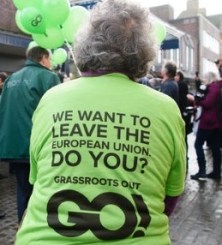
Today is the 193rd day since the Brexit Referendum. This being a prime number, and therefore indivisible, it seems an ironically appropriate day for a post about an event that exposed such deep and lamentable divisions among the people of the United Kingdom.

I didn’t have a vote, having emigrated from the Green and Pleasant Land 38 years ago, but if I had I would have voted Remain. I don’t know whether staying would be better in the long run for the British economy, but I’m pretty sure it would be better for Europe as a whole – economically, politically and in every other way in the short, medium and long run.

brexin brexout

But Joan Williams, a friend from way back whom I respect, voted for Brexit and I asked her why. Her answer had nothing to do with immigration or the NHS. I reproduce it here in full, with Joan’s permission:

“ If you really want to know why I voted leave, it’s basically because I’m afraid I do not think the EU is a good thing. I don’t think the world has outgrown the nation state yet, and that when it does it will not be through the likes of the EU. I love the individual European countries that I know (i.e. Germany, Italy and Spain), and value both our similarities and differences, and don’t see what is gained by trying artificially to weld us all together.

“ I don’t think any supranational institution is better than none, or that being semi-attached to an institution that is heading in the wrong direction is ‘the best of both worlds’. Most importantly, I revere the British constitution, and I don’t take our democratic freedom for granted; the more we compromise and dilute and sacrifice it, the more we are losing it.

“ We achieved our freedom and developed our democracy before anyone else, and it is still the best, and still an example to the world; whereas the EU, in its top-heavy unaccountable over-bureaucratic clumsiness, more resembles the old tired easily-corruptible19th century empires. One doesn’t need to invoke Napoleon: Nicholas II and Franz-Josef are bad enough! It is like choosing to be a dinosaur instead of a mammal. ”

Does anyone else out there feel the same way?

Sun Tzu

Standard

I am indebted to the blog https://chinaicons.com/ for drawing my attention to the proverbs of the famous Chinese military tactician Sun Tzu, whose writings are still studied by military commanders the world over. I’ve borrowed this picture of his statue from the China Icons website.

suntzu

Among the proverbs this one resonates with me particularly:

“Hence to fight and conquer in all your battles is not supreme excellence; supreme excellence consists in breaking the enemy’s resistance without fighting.”

Isn’t this exactly how the Chinese leadership is making fools of the rest of us? Their creeping occupation of the South China Sea, consolidation of their hold over Tibet and suppression of political freedom in Hong Kong are all being achieved through persistent bullying and angry outbursts that fall short of provoking armed conflict. (See my earlier post ‘Trump, Tsai and Xi’.)

Again, one can draw parallels with those other rogue states Israel and Russia – and North Korea too, I suppose.

PS According to the WordPress computer, my fellow-blogger at China Icons found that earlier post of mine “awesome”. He or she writes well and is not given to extravagant hyperbole, so I guess I’m up there with Sun Tzu himself – and even Confucius! Or maybe WordPress is leading the charge towards degradation of the English language. OMG, that would make me s-o-o-o stroppy!

Trump, Tsai and Xi

Standard

Why must we always be the ones to back down and compromise our principles? By ‘we’, by the way, I mean The Liberal Democratic West (LDW for short, not to be confused with LBW).

Taiwan is a country with its own government, socio-politico-economic system, policies and values. It suits many people to maintain the fiction that it’s a renegade province of the People’s Republic of China that will one day be reincorporated into the mainland Chinese polity, but for all practical purposes and for the foreseeable future it is a separate state.

Moreover, the so-called People’s Republic of China under Xi Jinping is going out of its way to behave badly. Whether it’s denying political rights in Hong Kong, flouting international law in the South China Sea, engaging in industrial espionage or dumping dodgy steel products on world markets, China is donning the clothes of a Rogue State.

And why wouldn’t it? It has observed that the LDW will always back down rather that risk a fight – unless its opponent is orders of magnitude weaker. Israel, Russia and Saudi Arabia have got away with murder, so why not China?

That’s why I applaud Donald Trump’s decision to talk to President Tsai of Taiwan (both pictured below, courtesy of AP). Let journalists and political advisors cringe and mouth the doctrine of appeasement. I say, “Enough! What’s the point of spending 4% of your GDP to build and maintain the most powerful military machine in the history of mankind if you always back off rather than risk hurting a few feelings?!”

trumpphoning tsaiphoning

Don’t get me wrong: On almost every issue I am at odds with both Donald Trump and John Bolton (tipped to become his Secretary of State), and I have no appetite for a Third World War. But in this one instance the Donald got it right and John’s endorsement was spot-on. We tried being nice to China and look where it got us. It’s time to try something different.

If Xi Jinping doesn’t like it, let him rant and act offended and threaten to cut off the supply of Barbie dolls.