The World Needs a New Award

Standard

A friend forwarded the following advertisement to me, and it gave me an idea. On my next birthday, by way celebration I shall present the first Stroppy Git Award for Meaning­less Twaddle. This is the only nomination so far – a strong contender, I think you’ll agree.

strogamet_01

My birthday is 17 January and nominations will close at midnight GMT (or UTC if you prefer) on Friday 13 January 2017. The award will take the form of a blog post dedicated to the perpetrator(s) of the winning entry.

12pm

Standard

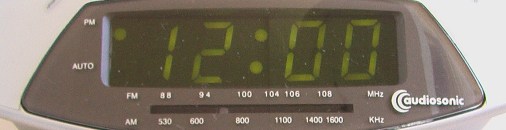
I was recently given a deadline of 12pm, which is meaningless by definition. The abbreviations ‘am’ and ‘pm’ mean ante meridiem and post meridiem – before and after noon. 12 noon cannot be either before or after noon because it is noon. 12 midnight is both before and after noon, and by the same margin.

12pm_2

The culprit had at least three alternative ways to express him/herself:

  • Words: ‘noon’ or ‘midnight’.
  • 24-hour clock: ‘1200’ or ‘2400’.
  • One-minute-off: ’11:59am’ or ’11:59pm’.

Airlines usually combine the last two of these for midnight departures or arrivals, to avoid any confusion about the date.

Don’t mind me: I’m just letting off steam. I’m sure none of my readers would be guilty of such an elementary mistake.

Behind the 8 Ball

Standard

The English language is embellished by many sporting metaphors. I have charm in spades but I still can’t turn a trick. I can’t even get to first base. It’s just not cricket. I’m not even in the ballpark. Someone should get a yellow card or else I’ll kick it into the long grass…

behind8ball

These metaphors are precious and should not be abused or misused. For example, I’ve noticed an increase in the incorrect use of the phrase ‘behind the 8 ball’. It means the same as ‘snookered’. If the cue ball is behind the 8 ball (the black ball in pool) you are prevented from making a legal shot at any other ball. If you’re behind the 8 ball your opponent has put you there and you are unable to achieve your goal. It does not mean that you’re performing poorly or behind schedule. Let’s get our ducks in a row, people!

Intrusic

Standard

That’s a new word: Intrusic.  It means ‘intrusive music’.  I’m getting increasingly stroppy about musical accompaniments to television programmes that do not need them – documentaries for example.

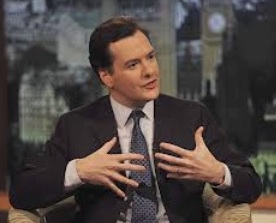
It’s often difficult to understand what people are saying anyway because of their different accents; or their insistence on sprinkling their speech with redundant words such as “So”, “Like” and “Y’know”; or the distraction of their waving their hands about (see randomly selected photos below).  Adding music to the mix just makes it harder still.  If anyone from the BBC or CNN or some similar organisation reads this – please stop it!

Handwaving1 Handwaving2

It’s mainly broadcasters such as the BBC World News channel that I have in my sights because they are specifically targeting an international audience.  If I have difficulty understanding what people are saying in my native language, what must it be like for someone listening in their second, third or fourth language?

You get my point.  Stop it.  Now.  All of you.

Hijab and Pants

Standard

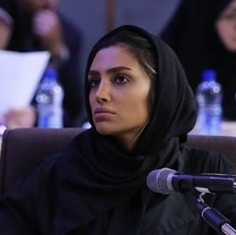
I just read an article about an Iranian model called Elham Arab, who was hauled up before the Revolutionary Court for posting pictures of herself in which her hair was visible – and dyed blonde.  This is how she looked in court:

ElhamArab

The article included this interesting snippet: “In Islam, hijab can refer both to the headscarf women wear to cover their hair and the principle of modesty that underlies the practice.”

I wondered whether there were parallels in our own culture, and I think I found one: “to be caught with one’s pants down.” In our culture to be without pants is as immodest and shameful as it is for a woman to be without a headscarf in Iran.

Can you think of any more?

Peace and Freedom

Standard

We have quite a few TV channels here in our Yerevan apartment but most of the time we watch BBC World. The downside is that, in addition to paid advertisements, we get endless repetitive station promos and fillers.  All last week we were getting news highlights of the same week in past years… the same highlights over and over again, every time the BBC had a 30-second gap to fill.

The most annoying highlight has been a clip from Conchita Wurst’s 2014 Eurovision Song Contest acceptance speech, in which he/she dedicates the award to “all those who believe in a future of peace and freedom.”

Conchita

I’m not against peace and I’m not against freedom, but anyone who believes that there will ever, ever be a time when the whole world will be at peace and in a state of freedom, however defined, should be certified. It is not in our nature as humans – or indeed in the nature of any living thing – to live in peace.  And it is inevitable that when any creature, be it animal or vegetable, occupies a position of power over another it will use that power to constrain the freedom of the weaker party.  That is, as the French say, life!

But maybe that’s not what Conchita meant. Maybe when he/she used the word ‘believe’ its intended meaning was no more than aspirational.  Or perhaps it was meant to be woolly and meaningless, as in “I believe in you.”

Whatever the case, Conchita causes me to have a stroppy fit every time I see the clip.  He/she is guilty either of talking nonsense or of sloppy use of the English language.  Am I being harsh?

So Now

Standard

I’ve got used to politicians following every spoken sentence with “Now…” to forestall interruptions from interviewers and opponents. But a new mannerism has crept into common usage.  People of all stripes who are asked questions are beginning their answers with “So…”.  How did this start, and what do they mean?

According to the all my dictionaries the word ‘so’ may be an adverb, a conjunction or a pronoun and has several meanings, none of which is compatible with this new usage.

I wouldn’t completely disallow placing ‘so’ at the beginning of a sentence. One might reasonably say, “So cold was the wind that I wore two scarves and a borrowed pair of fur-lined boots” or “So humbly did the young man beg her forgiveness that Amelia’s heart was quite melted.”  But what I am hearing when I snick on my radio and hear a politician quizzed does not conform to such a template.

So [= for that reason] I am stroppy. I am so stroppy.

Blackmail

Standard

I don’t suppose either Jacqui Lambie or Glenn Lazarus is a regular reader of my blog, but I owe them both an apology.

Last night, on the popular ABC TV programme ‘Q&A’ Jacqui Lambie (pictured below) stated forecully that she would not be blackmailed. This was in connection with the present shenanigans in the Australian Senate, where she sits as an independent. She was referring to the pressure being applied by the Government to independent senators (the ‘cross-benchers’) to pass a contentious bill or face an early election and perhaps lose their seats.

JacquiLambie

“That’s not blackmail!” I spluttered. “How dare these people mangle my language, the language of Shakespeare, the language of Milton, the language of J K Rowling!”

This morning Glenn Lazarus, another independent senator, was reported as saying exactly the same thing, so I spluttered again – while eating porridge.

But before sitting down to post about it I checked the Oxford English Dictionary and found the following:


blackmail

  • n. the action of demanding money from someone in return for not revealing discreditable information.  >  the use of threats or unfair manipulation in an attempt to influence someone’s actions.
  • v. subject to blackmail.

– DERIVATIVES blackmailer n.

– ORIGIN C16 (denoting protection money levied by Sc. chiefs): from black + obs. mail ‘tribute, rent’, from ON mál ‘speech, agreement’.


I think the little arrow symbol means ‘Derived meaning’ or something like that. If so, I have to concede that ‘the use of threats or unfair manipulation… ‘ comes pretty close to what Ms Lambie and Mr Lazarus meant. So… sorry for spluttering at you.

However, I offer only condemnatory bile to those who persist in using ‘bacteria’ and ‘criteria’ as singular forms. I frown at those using ‘data’ in this way, but that battle’s lost already.

The Apocrypha

Standard

We use the adjective ‘apocryphal’ to mean ‘ of doubtful authenticity’, but how many of us have read or even glimpsed a copy of the Apocrypha? The word comes from Greek of course, and means ‘hidden’. The Apocrypha is a collection of 14 books that have been appended to some versions of the Old Testament but are not generally recognised as authoritative scripture.

I found a copy of the Apocrypha among my grandfather’s papers. He signed the flyleaf and dated it 26/6/02, when he was 20 years old. A label on the inside cover informs the reader thus:

Extract from the Sixth Article of Religion (Of the Sufficiency of the Holy Scriptures for Salvation):

“And the other Books (as Hierome saith) the Church doth read for example of life and instruction of manners; but yet doth it not apply them to establish any doctrine…”

It goes on to list the 14 books, some of which are very short. One of the short ones is the Story (or History) or Susanna. I found that I knew the story without knowing its provenance. It’s the one about the woman, while bathing in her secluded garden, is raped by two elders who then falsely accuse her of adultery with a young man who supposedly fled the scene. God alerts a man called Daniel to the truth of the matter and instead of executing Susanna the pious crowd turns on the elders.

The story has inspired artists including Jacob Jordaens, who painted this version (Susanna and the Elders) in 1653.

SusannaAndTheElders1653

Regrettably the custom of punishing rape victims has not died out everywhere. Perhaps we should all read the Apocrypha “for example of life and instruction of manners.”

Nonce-Words

Standard

I learned a new word today. According to the Oxford Modern Australian Dictionary a ‘nonce-word’ is a word coined for one occasion only. It recalled for me an occasion when our son David was very young. Our cat walked by him, rubbing the length of her body against his leg. He giggled and said, “Fluffy just furred past me!”